IVF treatment has helped millions of couples achieve pregnancy, but one part of the process that often raises concern is the use of medications.
Patients frequently ask:
“Are IVF medications safe?”
“What side effects should I expect?”
The truth is that IVF medications are generally safe and carefully controlled—but like any medical treatment, they can come with side effects.
Understanding what is normal—and what is not—can help patients feel more prepared and less anxious during treatment.
Why Are IVF Medications Needed?
In a natural cycle, the body usually produces one egg per month.
IVF medications are used to:
- Stimulate the ovaries to produce multiple eggs
- Control ovulation timing
- Prepare the uterine lining for embryo transfer
These medications are typically hormonal and include:
- Follicle-stimulating hormone (FSH)
- Luteinizing hormone (LH)
- GnRH agonists or antagonists
- Progesterone
Each plays a specific role in the IVF process.
Common Side Effects of IVF Medications
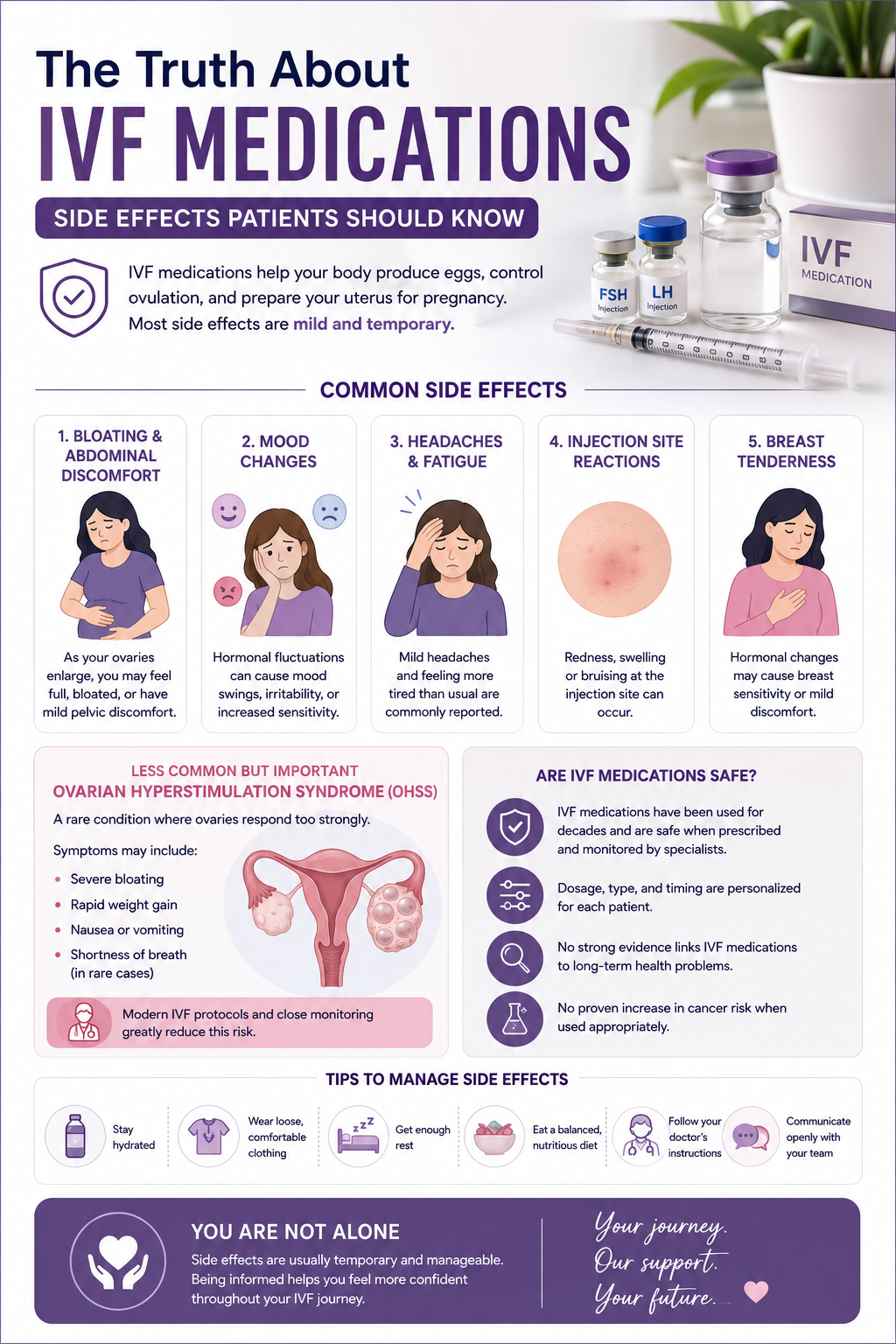
Most side effects are mild and temporary, and they vary from person to person.
1. Bloating and Abdominal Discomfort
As the ovaries respond to stimulation, they grow larger than usual.
This can lead to:
- A feeling of fullness
- Mild pelvic discomfort
- Temporary bloating
This is one of the most common and expected effects.
2. Mood Changes
Hormonal fluctuations can affect emotions.
Patients may experience:
- Mood swings
- Irritability
- Increased sensitivity
These changes are usually temporary and resolve after treatment.
3. Headaches and Fatigue
Some patients report:
- Mild headaches
- Feeling more tired than usual
These symptoms are typically short-lived.
4. Injection Site Reactions
Since many IVF medications are given by injection, patients may notice:
- Redness
- Mild swelling
- Bruising
Rotating injection sites can help reduce discomfort.
5. Breast Tenderness
Hormonal changes can cause:
- Breast sensitivity
- Mild discomfort
This is similar to symptoms experienced during a natural menstrual cycle.
Less Common but Important Side Effects
While most side effects are mild, there are some conditions patients should be aware of.
Ovarian Hyperstimulation Syndrome (OHSS)
OHSS is a potential complication where the ovaries respond too strongly to stimulation.
Symptoms may include:
- Severe bloating
- Rapid weight gain
- Nausea
- Shortness of breath (in rare cases)
Modern IVF protocols are designed to minimize this risk, and doctors closely monitor patients throughout treatment.
Are IVF Medications Safe?
IVF medications have been used for decades and are considered safe when prescribed and monitored by experienced specialists.
Clinics carefully adjust:
- Dosage
- Medication type
- Timing
based on each patient’s individual response.
This personalized approach helps reduce risks and improve outcomes.
Do IVF Medications Affect Long-Term Health?
Many patients worry about long-term effects.
Current research shows:
- No strong evidence linking IVF medications to long-term health problems
- No proven increase in cancer risk when used appropriately
However, as with any medical treatment, ongoing research continues.
How to Manage Side Effects
There are simple ways to make the process more comfortable:
- Stay hydrated
- Wear loose, comfortable clothing
- Get enough rest
- Maintain a balanced diet
- Follow your doctor’s instructions carefully
Most importantly, communicate openly with your medical team.
The Emotional Side of IVF Medications
Beyond physical symptoms, IVF medications can also affect emotional well-being.
It’s important to remember:
- Mood changes are normal
- You are not alone
- Support from your partner or clinic team can make a difference
Being informed helps reduce fear and uncertainty.
Final Thoughts
IVF medications are an essential part of fertility treatment, helping the body produce and support the conditions needed for pregnancy.
While side effects can occur, most are mild, temporary, and manageable.
The key is understanding what to expect and working closely with an experienced medical team.
Because in IVF, preparation is not just physical—it’s about feeling informed, supported, and confident throughout your journey.
For any of your fertility problems, please do not hesitate to contact us. At Fertility Solutions we pride ourselves with the excellent tailored personal care we provide to our patients for their specific needs. A team member will contact you as soon as we get your message, and construct a personal treatment plan for your fertility problems in the country of Cyprus. You can also contact our clinics directly through the links below.
Get in Touch with Our Clinics:
Cyprus Crown IVF Contact: https://en.cypruscrownivf.com/contact
Cyprus American IVF Contact: https://www.cyprusamericanivf.com/contact-us/
Dr. Halil Ibrahim Tekin (Dr. HIT) Youtube: https://www.youtube.com/@dr.halilibrahimtekin1715
Cyprus American IVF Youtube: https://www.youtube.com/@AmerikanTupBebekMerkezi
Clavis Fertility Centre: https://www.clavisfertilitycenter.com