If you’ve been researching IVF, you may have come across the term assisted hatching. While it sounds complex, it’s actually a laboratory technique that has been used in fertility treatment for many years.
Not every patient will need assisted hatching, but in certain situations it may help improve the chances of an embryo successfully implanting in the uterus.
Understanding what assisted hatching is—and when it may be recommended—can help you feel more confident when discussing your treatment options with your fertility specialist.
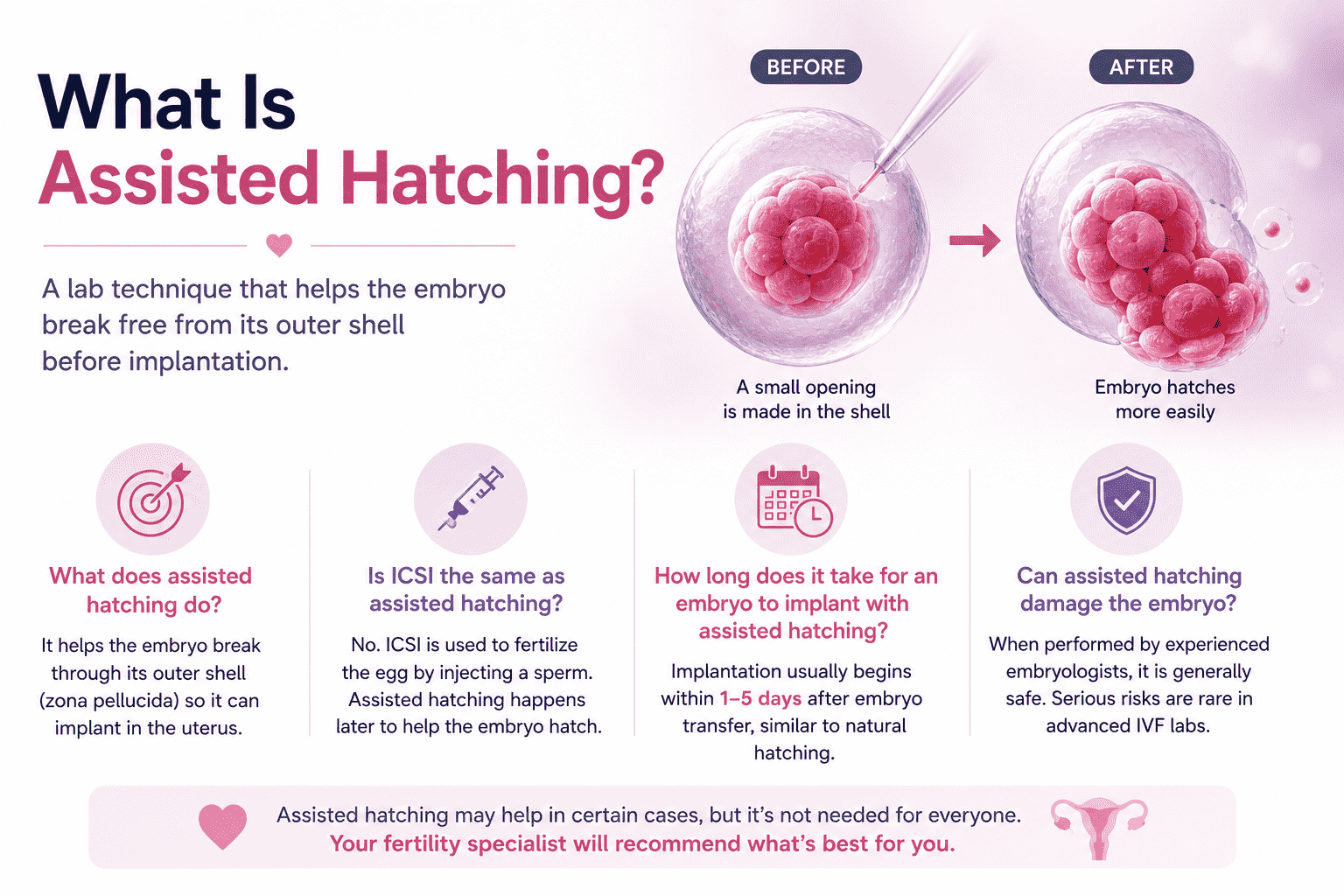
What Does Assisted Hatching Do?
Every embryo is surrounded by a thin protective outer shell called the zona pellucida.
Before implantation can occur, the embryo must naturally “hatch” from this shell so it can attach to the lining of the uterus.
During assisted hatching, an embryologist creates a very small opening or gently thins part of the outer shell using specialized laboratory equipment.
The goal is to make it easier for the embryo to hatch before implantation.
This procedure is performed shortly before the embryo is transferred to the uterus.
Is ICSI the Same as Assisted Hatching?
No.
Although both are laboratory techniques used during IVF, they serve completely different purposes.
ICSI (Intracytoplasmic Sperm Injection) is performed during fertilization.
A single sperm is injected directly into the egg to help achieve fertilization, particularly in cases of male infertility.
Assisted hatching takes place several days later, after an embryo has already developed.
Its purpose is to help the embryo break through its protective shell before implantation.
In some IVF cycles, patients may have ICSI, assisted hatching, both procedures, or neither, depending on their individual circumstances.
How Long Does It Take for an Embryo to Implant With Assisted Hatching?
It does not change the normal timing of implantation.
After embryo transfer, implantation generally begins within one to five days, although this can vary depending on:
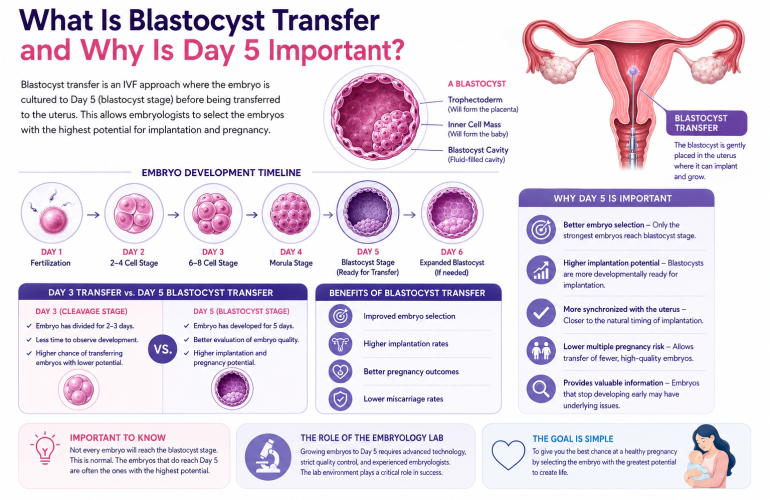
- Whether the embryo was transferred on Day 3 or Day 5
- Embryo quality
- Uterine receptivity
- Individual biological factors
Assisted hatching simply aims to help the embryo complete one of the natural steps required before implantation.
It does not guarantee that implantation will occur.
Can Assisted Hatching Damage the Embryo?
When performed by experienced embryologists using modern laboratory techniques, assisted hatching is generally considered safe.
However, like any laboratory procedure, it is not completely without risk.
Because the embryo is extremely delicate, the procedure should only be performed by trained professionals using advanced equipment.
Fortunately, serious complications are uncommon in experienced IVF laboratories.
Your fertility specialist will only recommend assisted hatching if they believe the potential benefits outweigh the risks.
Who May Benefit From Assisted Hatching?
Although it is not recommended for every IVF patient, assisted hatching may be considered for individuals who have:
- Previous failed IVF cycles
- Repeated implantation failure
- Frozen embryo transfers in selected cases
- Embryos with a thicker outer shell
- Advanced maternal age in certain situations
The decision is always based on the patient’s medical history and the embryologist’s assessment of the embryos.
Is Assisted Hatching Necessary for Everyone?
No.
Many patients achieve successful pregnancies without assisted hatching.
Modern IVF treatment is highly personalized, and additional laboratory techniques are only recommended when they are expected to provide a potential benefit.
The quality of the embryo, the health of the uterus, and overall fertility factors remain far more important than any single laboratory procedure.
Final Thoughts
Assisted hatching is one of several advanced techniques available in modern IVF laboratories.
Its purpose is simple: to help an embryo hatch from its protective outer shell before implantation.
Although it may benefit certain patients—particularly those with previous implantation failure or specific clinical indications—it is not necessary for every IVF cycle.
If your fertility specialist recommends assisted hatching, don’t hesitate to ask why it may be appropriate for your individual treatment plan.
As with every aspect of IVF, the most successful outcomes come from personalized care, experienced embryologists, and selecting the treatment approach that best fits your unique fertility journey.
For any of your fertility problems, please do not hesitate to contact us. At Fertility Solutions we pride ourselves with the excellent tailored personal care we provide to our patients for their specific needs. A team member will contact you as soon as we get your message, and construct a personal treatment plan for your fertility problems in the country of Cyprus. You can also contact our clinics directly through the links below.
Get in Touch with Our Clinics:
Cyprus Crown IVF Contact: https://en.cypruscrownivf.com/contact
Cyprus American IVF Contact: https://www.cyprusamericanivf.com/contact-us/
Dr. Halil Ibrahim Tekin (Dr. HIT) Youtube: https://www.youtube.com/@dr.halilibrahimtekin1715
Cyprus American IVF Youtube: https://www.youtube.com/@AmerikanTupBebekMerkezi
Clavis Fertility Centre: https://www.clavisfertilitycenter.com