This week we are touching on the subject whether endometrial thickness can affect IVF success.
When preparing for an embryo transfer, many patients focus on embryo quality, hormone levels, and medications. However, another important factor often discussed during IVF treatment is the endometrial lining, also known as the uterine lining.
Your fertility specialist will usually measure the thickness of your endometrium using ultrasound before embryo transfer. If the lining appears thinner than expected, patients often worry that their chances of pregnancy have disappeared.
The good news is that while endometrial thickness is important, it is only one piece of the puzzle. Many factors work together to achieve a successful implantation.
Why Is the Uterine Lining Important?
The endometrium is the inner lining of the uterus where an embryo implants and begins to grow.
Each month, hormones cause the lining to thicken in preparation for pregnancy.
If implantation occurs, the lining helps nourish the developing embryo during the earliest stages of pregnancy.
A healthy endometrium should not only be an appropriate thickness but also have a receptive environment that allows the embryo to attach successfully.
This is why your fertility clinic carefully monitors the uterine lining throughout your IVF cycle.
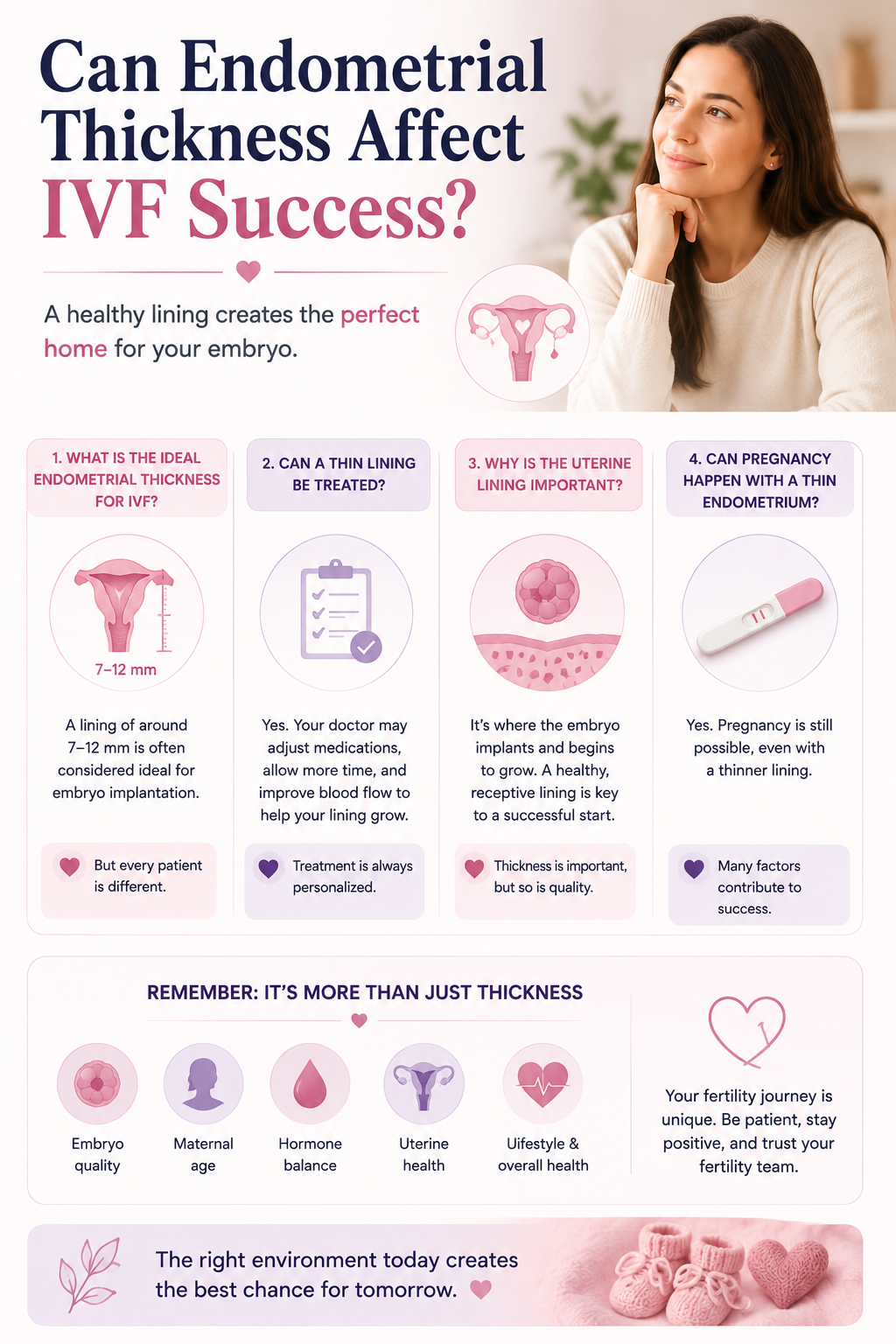
What Is the Ideal Endometrial Thickness for IVF?
There is no single number that guarantees success.
However, many fertility specialists generally look for an endometrial thickness of around 7–12 mm before embryo transfer.
A lining within this range is often considered favorable for implantation.
That said, every patient is different.
Some women become pregnant with a thinner lining, while others may not achieve pregnancy despite having an ideal measurement.
Endometrial thickness is one factor among many, including:
- Embryo quality
- Maternal age
- Hormone levels
- Uterine health
- Overall reproductive history
Your fertility specialist will consider all of these factors when planning treatment.
Can a Thin Lining Be Treated?
In many cases, yes.
If the lining is thinner than expected, your fertility specialist may adjust your treatment plan before embryo transfer.
Depending on the individual situation, possible approaches may include:
- Adjusting estrogen medication
- Allowing additional time for the lining to develop
- Reviewing blood flow to the uterus
- Investigating underlying uterine conditions
The goal is to create the best possible environment for implantation before proceeding with embryo transfer.
Treatment is always individualized, and not every patient with a thin lining requires the same approach.
Can Pregnancy Happen With a Thin Endometrium?
Yes.
Although a thicker lining is generally associated with improved implantation, pregnancy can still occur with a thinner endometrium.
There are documented cases of healthy pregnancies in women whose uterine lining measured below the commonly recommended range.
This is because implantation depends on much more than thickness alone.
Other important factors include:
- Embryo quality
- Chromosomal health of the embryo
- Hormonal balance
- Uterine receptivity
- Overall maternal health
A thinner lining does not automatically mean IVF will fail.
What Else Affects Implantation?
Successful implantation is a complex process.
Even with an excellent embryo and a well-prepared uterine lining, pregnancy cannot be guaranteed.
Several factors influence implantation, including:
- Embryo quality
- Maternal age
- Blood supply to the uterus
- Hormone levels
- Underlying medical conditions
- Lifestyle factors such as smoking and obesity
Because implantation is influenced by multiple variables, fertility specialists evaluate the entire clinical picture rather than relying on a single ultrasound measurement.
Staying Positive During Treatment
Hearing that your uterine lining is “too thin” can feel discouraging.
However, it is important to remember that your fertility specialist measures the lining precisely because they want to optimize your chances before moving forward.
Sometimes waiting a few extra days or making small adjustments to medication is all that is needed.
Every IVF cycle is carefully monitored to give patients the best possible opportunity for success.
Final Thoughts
Endometrial thickness plays an important role in preparing the uterus for embryo implantation, but it is only one part of a much bigger picture.
While many fertility specialists aim for a lining of around 7–12 mm, successful pregnancies can still occur outside this range.
If your lining is thinner than expected, don’t lose hope.
Modern fertility treatments allow doctors to adjust medications, monitor your progress closely, and personalize your treatment plan to give you the best possible chance of success.
The most important thing is to trust your fertility team, ask questions, and remember that every IVF journey is unique.
Sometimes, patience and the right treatment adjustments make all the difference.
For any of your fertility problems, please do not hesitate to contact us. At Fertility Solutions we pride ourselves with the excellent tailored personal care we provide to our patients for their specific needs. A team member will contact you as soon as we get your message, and construct a personal treatment plan for your fertility problems in the country of Cyprus. You can also contact our clinics directly through the links below.
Get in Touch with Our Clinics:
Cyprus Crown IVF Contact: https://en.cypruscrownivf.com/contact
Cyprus American IVF Contact: https://www.cyprusamericanivf.com/contact-us/
Dr. Halil Ibrahim Tekin (Dr. HIT) Youtube: https://www.youtube.com/@dr.halilibrahimtekin1715
Cyprus American IVF Youtube: https://www.youtube.com/@AmerikanTupBebekMerkezi
Clavis Fertility Centre: https://www.clavisfertilitycenter.com