One of the most difficult conversations patients may have during IVF treatment is hearing that some or all of their embryos are chromosomally abnormal.
Many couples immediately ask:
“Did we do something wrong?”
“Can this be prevented?”
“Why are my embryos abnormal?”
The truth is that chromosomal abnormalities are surprisingly common, especially as women and men get older. In many cases, these abnormalities occur naturally during egg or sperm development and are completely outside a patient’s control.
Understanding why these abnormalities occur can help patients make informed decisions and reduce some of the uncertainty that often accompanies fertility treatment.
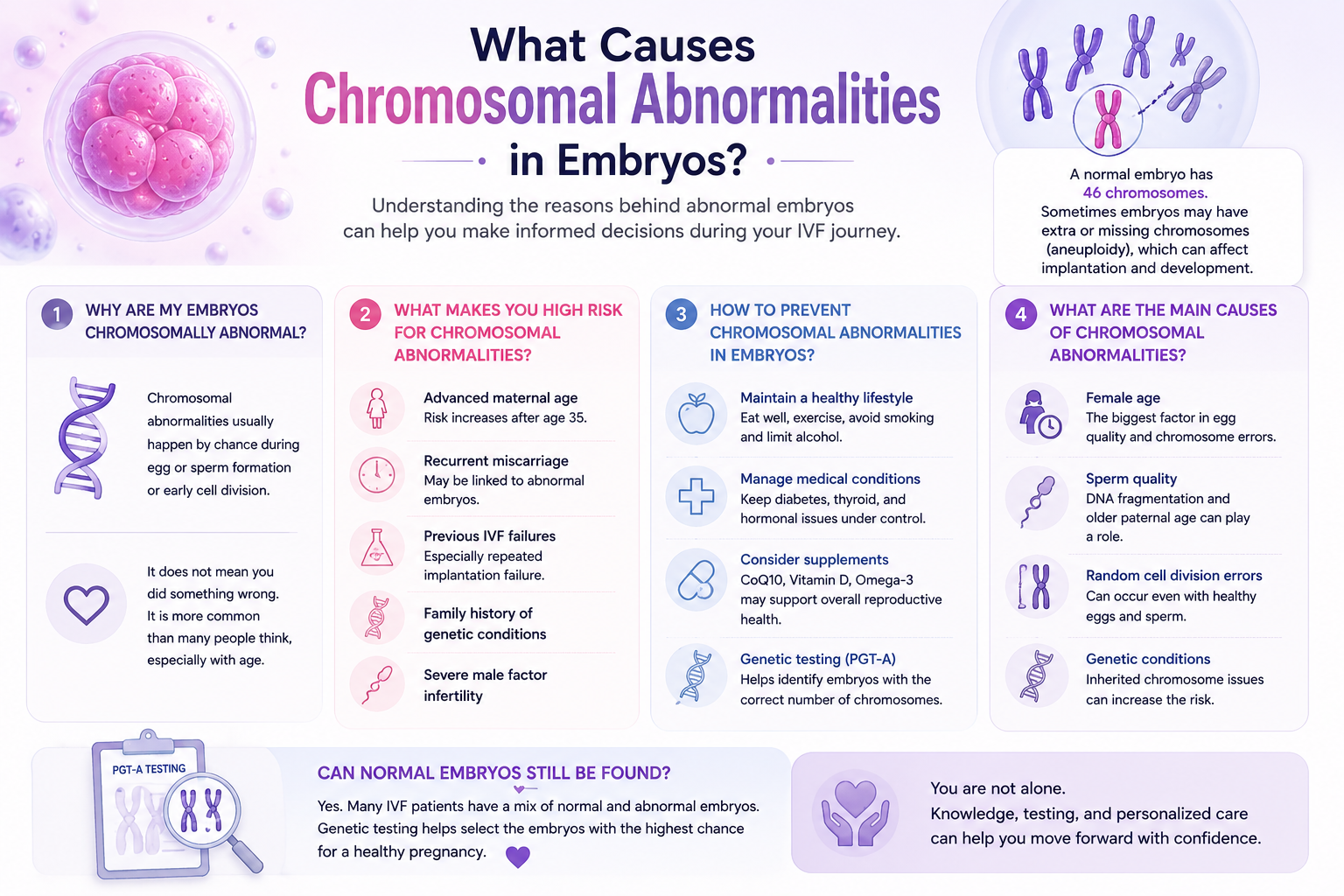
Why Are My Embryos Chromosomally Abnormal?
Embryos contain genetic material from both the egg and the sperm.
A healthy embryo typically contains 46 chromosomes.
Sometimes, during fertilization or cell division, embryos may receive:
- Extra chromosomes
- Missing chromosomes
- Abnormal chromosome arrangements
This is called aneuploidy.
An abnormal embryo may:
- Stop developing
- Fail to implant
- Result in miscarriage
- Lead to certain genetic conditions
Importantly, chromosomal abnormalities often happen naturally and do not necessarily indicate that either partner has a medical problem.
Many healthy couples can produce abnormal embryos, especially as maternal age increases.
What Are the Main Causes of Chromosomal Abnormalities?
Several factors can contribute to abnormal embryos.
Female Age
Age remains the strongest factor.
As women get older:
- Egg quality declines
- Chromosome separation becomes less accurate
- Aneuploid embryos become more common
This is one reason IVF success rates often decrease with age.
Sperm Quality
Although egg quality receives much attention, sperm health also plays an important role.
Factors such as:
- Sperm DNA fragmentation
- Advanced paternal age
- Severe male factor infertility
may contribute to embryo abnormalities.
Random Cell Division Errors
Many chromosomal abnormalities simply occur during the earliest stages of embryo development.
Even perfectly healthy eggs and sperm can occasionally produce abnormal embryos.
Genetic Conditions
Certain inherited chromosome rearrangements, such as balanced translocations, can increase the risk of abnormal embryos.
In these situations, genetic testing may be recommended.
What Makes You High Risk for Chromosomal Abnormalities?
Several factors may increase the risk.
These include:
Advanced Maternal Age
Women over 35 generally experience higher rates of chromosomal abnormalities.
The risk continues to increase as age advances.
Recurrent Miscarriage
Repeated pregnancy loss can sometimes be associated with abnormal embryos.
Previous IVF Failures
Multiple failed IVF cycles may lead doctors to investigate possible chromosomal issues.
Family History of Genetic Conditions
Some inherited disorders can increase the likelihood of abnormal embryos.
Male Factor Infertility
Certain sperm abnormalities may contribute to genetic problems during embryo development.
How to Prevent Chromosomal Abnormalities in Embryos?
Unfortunately, there is no guaranteed way to prevent chromosomal abnormalities.
However, some strategies may help optimize reproductive health.
Maintain a Healthy Lifestyle
Patients are encouraged to:
- Avoid smoking
- Limit alcohol consumption
- Maintain a healthy weight
- Exercise regularly
- Follow a balanced diet
Manage Medical Conditions
Conditions such as diabetes, thyroid disorders, and hormonal imbalances should be treated appropriately.
Consider Antioxidants and Supplements
Some patients use supplements such as:
- CoQ10
- Vitamin D
- Omega-3 fatty acids
These may support overall reproductive health, although they cannot guarantee normal embryos.
Genetic Testing
PGT-A allows embryologists to examine embryo chromosomes before transfer.
This can help identify embryos with the correct number of chromosomes in certain patients.
Can Normal Embryos Still Be Found?
Absolutely.
Many IVF patients produce a mixture of:
- Chromosomally normal embryos
- Chromosomally abnormal embryos
The goal of modern IVF is to identify embryos with the highest potential for implantation and healthy pregnancy.
Even patients who produce some abnormal embryos may still have healthy embryos available for transfer.
The Emotional Side of Abnormal Embryos
Learning that embryos are abnormal can be emotionally difficult.
Patients often experience:
- Frustration
- Sadness
- Guilt
- Anxiety
It is important to remember that chromosomal abnormalities are often a natural biological event.
In most cases, they are not caused by anything the patient did or failed to do.
Final Thoughts
Chromosomal abnormalities are one of the most common reasons embryos fail to implant or pregnancies end in miscarriage.
Age, egg quality, sperm quality, and natural cell division errors all play a role.
While these abnormalities cannot always be prevented, modern fertility treatments and genetic testing can provide valuable information and help guide treatment decisions.
Understanding embryo genetics allows patients and fertility specialists to make more informed decisions and move forward with greater confidence and clarity.
Because sometimes the most important step is not asking, “Why did this happen?” but rather, “What can we learn from it?”
For any of your fertility problems, please do not hesitate to contact us. At Fertility Solutions we pride ourselves with the excellent tailored personal care we provide to our patients for their specific needs. A team member will contact you as soon as we get your message, and construct a personal treatment plan for your fertility problems in the country of Cyprus. You can also contact our clinics directly through the links below.
Get in Touch with Our Clinics:
Cyprus Crown IVF Contact: https://en.cypruscrownivf.com/contact
Cyprus American IVF Contact: https://www.cyprusamericanivf.com/contact-us/
Dr. Halil Ibrahim Tekin (Dr. HIT) Youtube: https://www.youtube.com/@dr.halilibrahimtekin1715
Cyprus American IVF Youtube: https://www.youtube.com/@AmerikanTupBebekMerkezi
Clavis Fertility Centre: https://www.clavisfertilitycenter.com