If you have started researching IVF, you have probably come across terms such as PGT-A and PGT-M. At first glance, these tests may sound similar, but they serve very different purposes.
For many patients, genetic testing can feel overwhelming. The names are complicated, the science can seem intimidating, and the decisions involved are often emotional.
The good news is that understanding the basics of these tests can help you make informed decisions about your fertility treatment.
What Does PGT-M Mean in IVF?
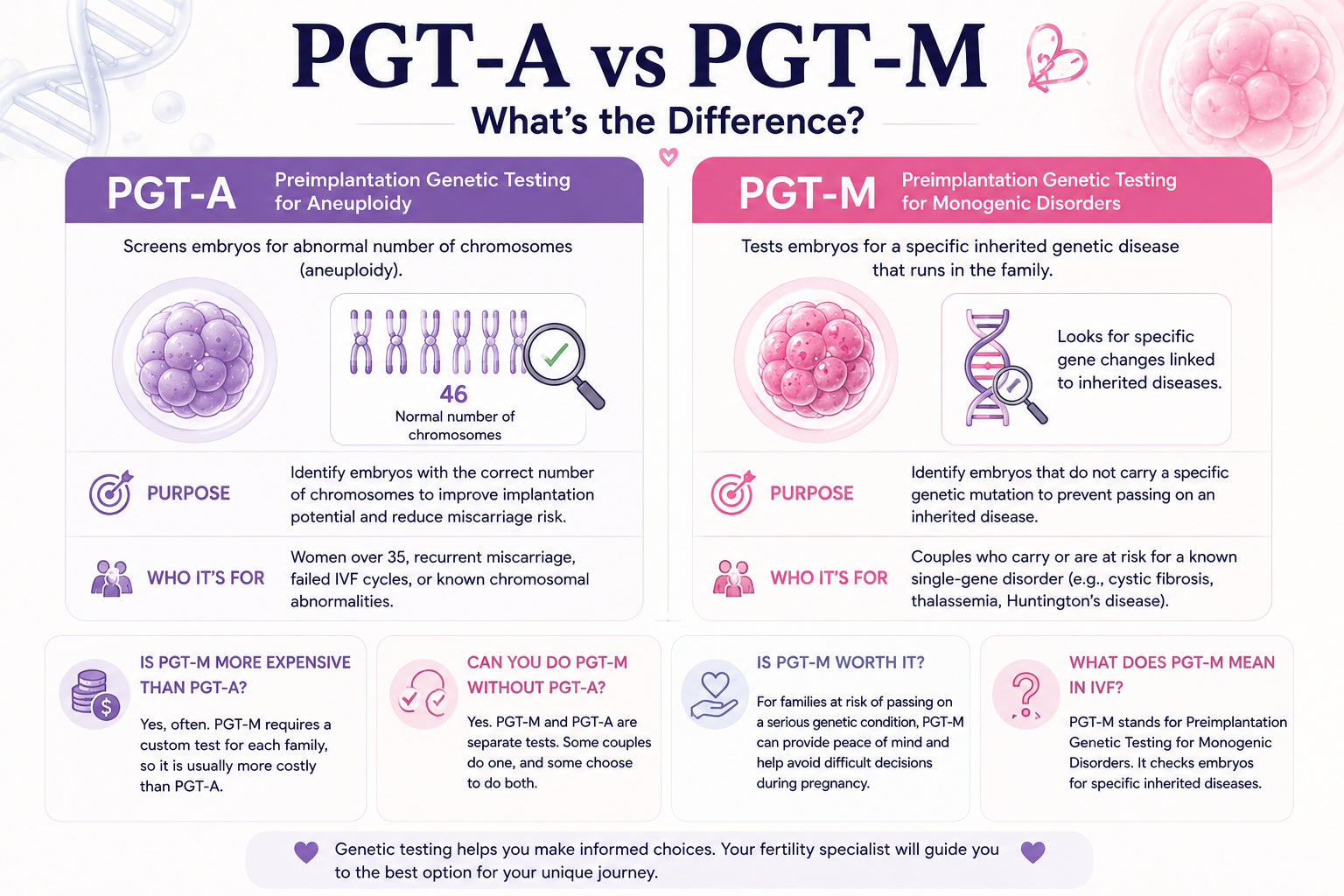
PGT-M stands for Preimplantation Genetic Testing for Monogenic Disorders.
This test is designed to identify embryos that carry a specific inherited genetic disease.
PGT-M may be recommended when one or both parents carry a known genetic condition such as:
- Cystic fibrosis
- Thalassemia
- Sickle cell disease
- Huntington’s disease
- Certain hereditary cancer syndromes
The goal of PGT-M is to identify embryos that do not carry the specific disease before embryo transfer.
This allows couples with inherited conditions to reduce the risk of passing the disorder to their children.
What Is PGT-A?
PGT-A stands for Preimplantation Genetic Testing for Aneuploidy.
Rather than looking for one specific disease, PGT-A evaluates the number of chromosomes within an embryo.
Humans normally have 46 chromosomes.
Embryos with missing or extra chromosomes may have:
- Lower implantation rates
- Higher miscarriage rates
- Increased risk of certain genetic conditions
PGT-A helps identify embryos with the correct number of chromosomes, which may improve embryo selection in some patients.
It is often considered for:
- Women over 35
- Recurrent miscarriage
- Multiple IVF failures
- Previous chromosomal abnormalities
Can You Do PGT-M Without PGT-A?
Yes.
PGT-M and PGT-A are separate tests.
Some couples only require PGT-M because they are trying to avoid a known inherited condition.
Others may choose to perform both tests simultaneously.
In some cases, combining PGT-M and PGT-A can provide additional information about embryo health, especially for patients who also have age-related concerns or recurrent pregnancy loss.
The decision depends on each patient’s medical history and reproductive goals.
Is PGT-M More Expensive Than PGT-A?
In many situations, yes.
PGT-M often requires the creation of a highly individualized genetic test designed specifically for a family’s inherited condition.
This process can involve:
- Genetic consultations
- DNA analysis of family members
- Development of personalized testing protocols
Because of this additional laboratory work, PGT-M is frequently more expensive than PGT-A.
PGT-A typically follows a more standardized testing process, while PGT-M is highly customized.
The exact cost varies depending on the condition being tested and the laboratory performing the analysis.
Is PGT-M Worth It?
For families carrying known genetic diseases, many consider PGT-M to be extremely valuable.
The benefits may include:
- Reducing the risk of passing on a genetic disorder
- Avoiding difficult decisions during pregnancy
- Providing additional reassurance before embryo transfer
However, whether PGT-M is “worth it” depends entirely on the individual situation.
For couples without known genetic conditions, PGT-M is generally not necessary.
A consultation with a fertility specialist and genetic counselor can help determine whether this testing would provide meaningful benefits.
Who May Benefit from PGT-A?
PGT-A may be helpful for:
- Women over 35
- Recurrent miscarriage patients
- Repeated implantation failure
- Multiple unsuccessful IVF cycles
By identifying embryos with normal chromosome numbers, doctors may be able to select embryos with a higher likelihood of implantation.
However, PGT-A is not necessary for every patient.
The Importance of Personalized Care
Genetic testing in IVF is not a one-size-fits-all approach.
Some patients need PGT-M.
Others may benefit from PGT-A.
Some couples may require both.
The decision should always be based on:
- Family history
- Maternal age
- Previous pregnancy history
- Fertility diagnosis
- Genetic risk factors
A personalized treatment plan remains one of the most important factors in successful fertility care.
Final Thoughts
PGT-A and PGT-M may sound similar, but they serve different purposes.
PGT-A looks at chromosome numbers.
PGT-M searches for specific inherited diseases.
Both technologies have helped many families reduce genetic risks and make more informed decisions during IVF treatment.
The best choice depends on your individual medical history, family history, and reproductive goals.
As fertility medicine continues to advance, genetic testing is giving patients more information, more options, and greater confidence as they move forward on their fertility journey.
For any of your fertility problems, please do not hesitate to contact us. At Fertility Solutions we pride ourselves with the excellent tailored personal care we provide to our patients for their specific needs. A team member will contact you as soon as we get your message, and construct a personal treatment plan for your fertility problems in the country of Cyprus. You can also contact our clinics directly through the links below.
Get in Touch with Our Clinics:
Cyprus Crown IVF Contact: https://en.cypruscrownivf.com/contact
Cyprus American IVF Contact: https://www.cyprusamericanivf.com/contact-us/
Dr. Halil Ibrahim Tekin (Dr. HIT) Youtube: https://www.youtube.com/@dr.halilibrahimtekin1715
Cyprus American IVF Youtube: https://www.youtube.com/@AmerikanTupBebekMerkezi
Clavis Fertility Centre: https://www.clavisfertilitycenter.com