Finding out you have fibroids can be worrying, especially if you’re planning to start IVF. Many women immediately wonder whether fibroids will affect their chances of becoming pregnant or whether they need surgery before treatment.
The reassuring news is that many women with fibroids go on to have successful pregnancies, both naturally and through IVF. However, not all fibroids are the same. Their size, number, and location can influence whether they affect fertility or implantation.
Understanding how fibroids interact with IVF can help you make informed decisions with your fertility specialist.
What Are Fibroids?
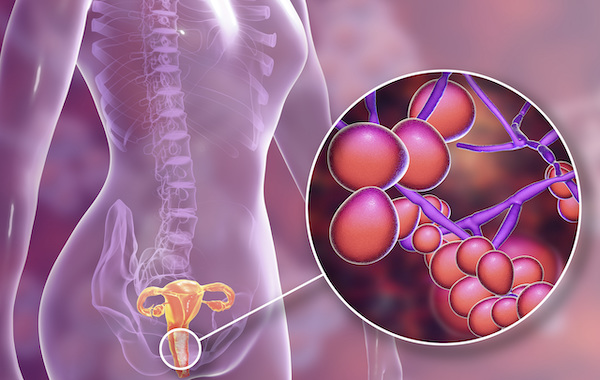
Fibroids, also known as uterine leiomyomas, are non-cancerous growths that develop from the muscle tissue of the uterus.
They are extremely common, particularly in women between the ages of 30 and 50.
Many women never experience symptoms and only discover they have fibroids during a routine ultrasound or fertility investigation.
Others may experience:
- Heavy menstrual bleeding
- Pelvic pressure or pain
- Frequent urination
- Pain during intercourse
- Difficulty becoming pregnant
Not every fibroid affects fertility, and treatment is not always necessary.
Can You Have Successful IVF With Fibroids?
Yes.
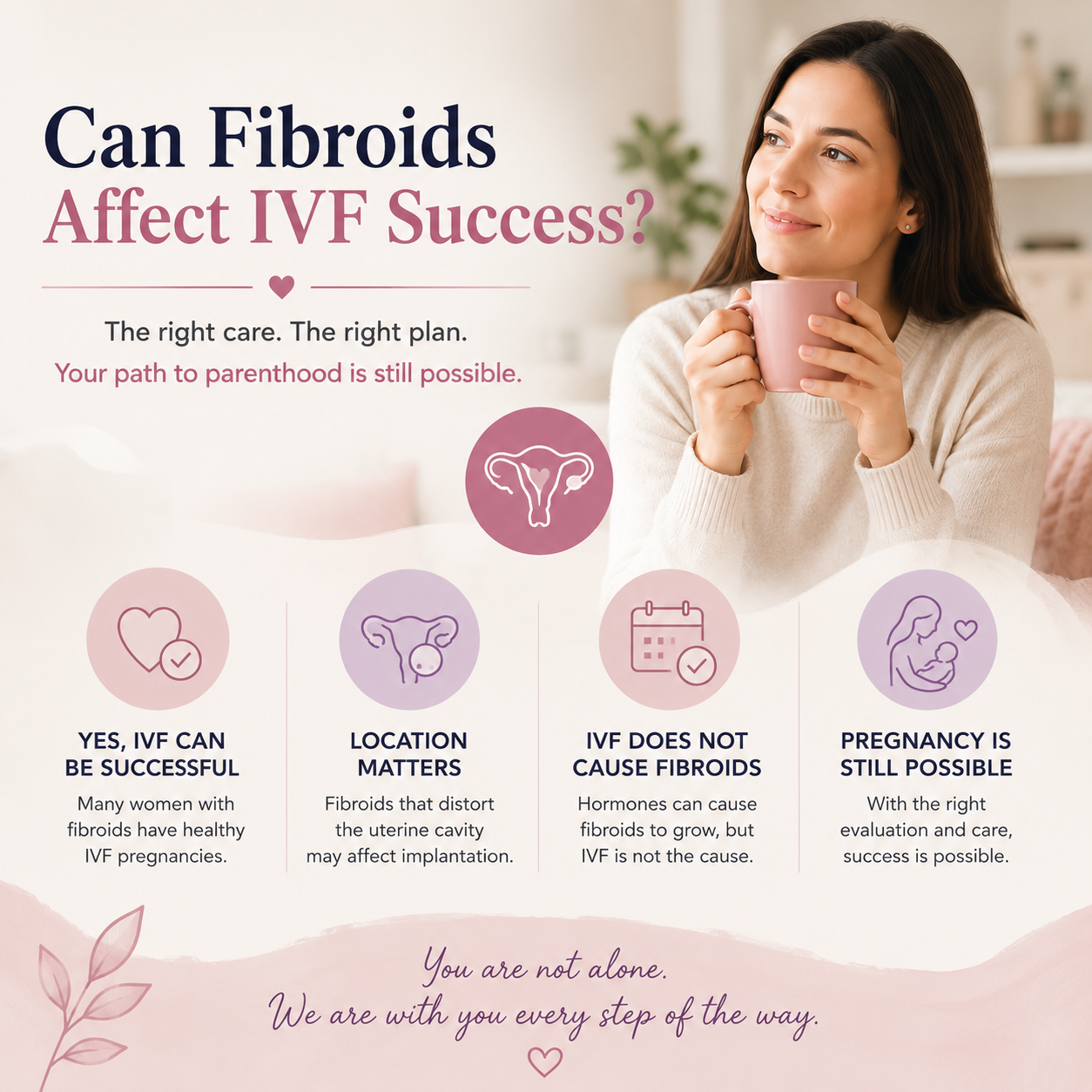
Many women with fibroids have successful IVF treatment and healthy pregnancies.
Whether fibroids affect IVF depends largely on where they are located.
Fibroids that are less likely to affect IVF include:
- Small fibroids on the outer surface of the uterus (subserosal fibroids)
- Fibroids that do not distort the uterine cavity
Fibroids that may reduce IVF success include:
- Fibroids growing inside the uterine cavity (submucosal fibroids)
- Large fibroids that significantly change the shape of the uterus
- Fibroids that interfere with embryo implantation
Before starting IVF, your fertility specialist will usually perform an ultrasound—and sometimes a hysteroscopy or MRI—to determine whether fibroids could affect treatment.
Is It Harder to Conceive With Fibroids?
It can be, but not always.
Many women with fibroids conceive naturally without any problems.
However, certain fibroids may make pregnancy more difficult by:
- Changing the shape of the uterine cavity
- Blocking the fallopian tubes
- Interfering with implantation
- Reducing blood flow to the lining of the uterus
The larger the fibroid and the closer it is to the uterine cavity, the more likely it is to affect fertility.
This is why every patient requires an individual assessment.
Does IVF Increase the Risk of Fibroids?
This is a common concern.
Current evidence does not suggest that IVF causes fibroids to develop.
Fibroids are influenced by hormones, particularly estrogen and progesterone, so they may temporarily increase in size during periods of hormonal stimulation or pregnancy.
However, IVF itself is not considered a cause of fibroids.
Most women who are diagnosed with fibroids already had them before beginning fertility treatment.
Has Anyone Had a Successful Pregnancy With Fibroids?
Absolutely.
Every year, thousands of women with fibroids have healthy pregnancies.
Many patients require no treatment at all.
Others may have fibroids removed before IVF if their doctor believes they are affecting fertility.
Success depends on many factors, including:
- Maternal age
- Egg quality
- Embryo quality
- Overall uterine health
- The size and location of the fibroids
The presence of fibroids alone does not mean pregnancy is impossible.
When Should Fibroids Be Removed Before IVF?
Not every fibroid requires surgery.
Your fertility specialist may recommend removing fibroids if they:
- Distort the uterine cavity
- Are submucosal
- Cause significant symptoms
- Are believed to reduce implantation
- Have contributed to recurrent miscarriage or repeated IVF failure
Removing fibroids that interfere with the uterine cavity may improve the chances of successful implantation in selected patients.
The Importance of Individualized Treatment
One of the biggest misconceptions is that every woman with fibroids needs surgery before IVF.
In reality, treatment depends on:
- The number
- Their size
- Their location
- Your symptoms
- Your fertility history
Some women can safely proceed directly to IVF, while others may benefit from treating fibroids first.
An individualized treatment plan is always the best approach.
Final Thoughts
Fibroids are common, and for many women they do not prevent pregnancy or successful IVF.
The key is understanding which fibroids matter and which do not.
With modern ultrasound imaging, experienced fertility specialists can determine whether fibroids are likely to interfere with implantation and recommend the most appropriate treatment plan.
If you’ve been diagnosed with fibroids, don’t assume your chances of becoming a parent are over.
Many women with fibroids achieve healthy pregnancies every year, and with the right evaluation and personalized care, IVF can still be a very successful option.
For any of your fertility problems, please do not hesitate to contact us. At Fertility Solutions we pride ourselves with the excellent tailored personal care we provide to our patients for their specific needs. A team member will contact you as soon as we get your message, and construct a personal treatment plan for your fertility problems in the country of Cyprus. You can also contact our clinics directly through the links below.
Get in Touch with Our Clinics:
Cyprus Crown IVF Contact: https://en.cypruscrownivf.com/contact
Cyprus American IVF Contact: https://www.cyprusamericanivf.com/contact-us/
Dr. Halil Ibrahim Tekin (Dr. HIT) Youtube: https://www.youtube.com/@dr.halilibrahimtekin1715
Cyprus American IVF Youtube: https://www.youtube.com/@AmerikanTupBebekMerkezi
Clavis Fertility Centre: https://www.clavisfertilitycenter.com