Today’s article will cover some information about how PCOS name was changed to PMOS. For years, millions of women around the world have been diagnosed with Polycystic Ovary Syndrome, commonly known as PCOS. It is one of the most common hormonal disorders affecting women of reproductive age and a leading cause of infertility.
However, in recent years, researchers and medical experts have started questioning whether the name “PCOS” accurately reflects the condition. Some specialists have proposed replacing it with a new term: PMOS, which stands for Metabolic Reproductive Syndrome or Polyfollicular Metabolic Ovarian Syndrome, depending on the proposal being discussed.
While no official name change has occurred yet, the debate highlights an important issue: many women—and even healthcare providers—may misunderstand what PCOS truly is.
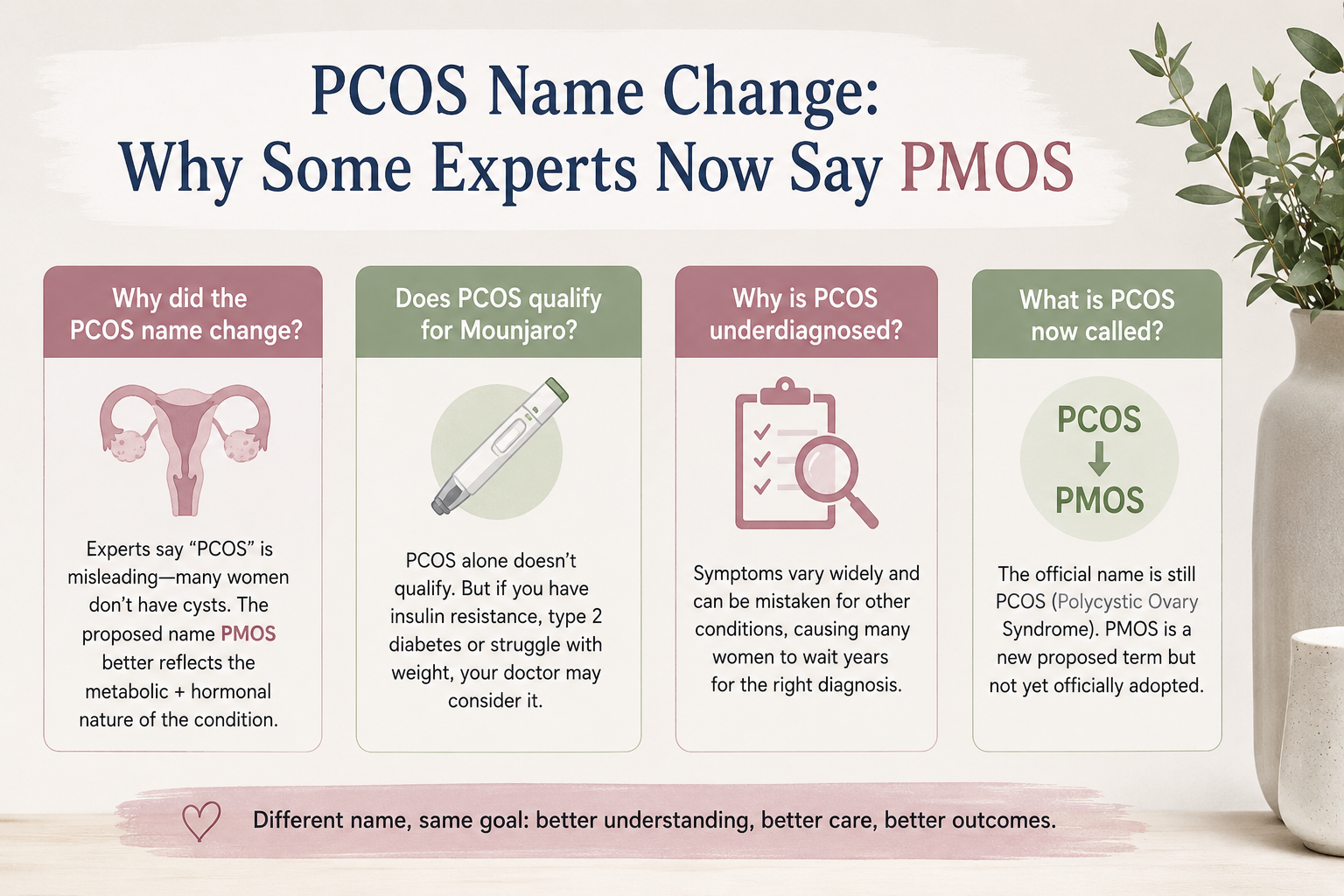
Why Did the PCOS Name Change?
Technically, PCOS has not officially changed its name.
However, experts have argued for years that the current name can be misleading.
The term “polycystic ovaries” suggests that ovarian cysts are the main problem. In reality, many women with PCOS do not have ovarian cysts at all. Meanwhile, some women without PCOS may have polycystic-looking ovaries on ultrasound.
The condition is actually much more complex.
PCOS affects:
- Hormone production
- Ovulation
- Insulin regulation
- Metabolism
- Weight management
- Fertility
Because the syndrome extends far beyond the ovaries, some experts believe a name emphasizing the metabolic and hormonal aspects would be more accurate.
This is where the idea of PMOS comes from.
What Is PCOS Now Called?
At present, the official medical diagnosis remains Polycystic Ovary Syndrome (PCOS).
Organizations worldwide continue to use the term PCOS, including:
- World Health Organization
- European Society of Human Reproduction and Embryology
- American Society for Reproductive Medicine
PMOS is not currently an officially recognized diagnosis.
Instead, it represents part of an ongoing discussion about improving awareness and understanding of the condition.
For now, patients should know that if they hear the term PMOS, it is generally referring to the same underlying disorder currently known as PCOS.
Why Is PCOS Underdiagnosed?
One of the biggest challenges with PCOS is that many women go undiagnosed for years.
Symptoms can vary dramatically from person to person.
Some women experience:
- Irregular periods
- Difficulty conceiving
- Excess facial or body hair
- Acne
- Weight gain
Others may have only one or two symptoms.
Because of this variation, PCOS is often mistaken for:
- Stress-related hormone changes
- Thyroid disorders
- Normal menstrual irregularities
- Weight-related issues
Many women spend years seeking answers before receiving a proper diagnosis.
Early diagnosis is important because PCOS can affect not only fertility but also long-term health, including insulin resistance, type 2 diabetes, and cardiovascular risk.
Does PCOS Qualify for Mounjaro?
Mounjaro (tirzepatide) is a medication approved for type 2 diabetes and, in some countries, weight management.
PCOS itself does not automatically qualify someone for Mounjaro.
However, many women with PCOS struggle with:
- Insulin resistance
- Obesity
- Weight gain
In these situations, a healthcare provider may determine that medications such as tirzepatide could be appropriate, depending on the patient’s overall health and local prescribing guidelines.
It’s important to remember that medication is only one part of PCOS management.
Treatment often includes:
- Lifestyle modifications
- Nutritional support
- Exercise
- Hormonal treatment
- Fertility treatment when pregnancy is desired
What Does This Mean for Fertility?
For many women, the biggest concern is fertility.
PCOS can interfere with ovulation, making conception more difficult. Fortunately, modern fertility treatments offer excellent options.
Depending on the patient’s situation, treatment may include:
- Ovulation induction medications
- Intrauterine insemination (IUI)
- IVF treatment
- Lifestyle and weight management programs
Many women with PCOS go on to achieve successful pregnancies with the right treatment plan.
Final Thoughts
Whether it is called PCOS today or PMOS in the future, the most important thing to understand is that this condition is much more than an ovarian disorder.
It is a complex hormonal and metabolic condition that affects fertility, overall health, and quality of life.
The ongoing discussion about changing the name reflects a growing understanding of the condition and a desire to improve awareness, diagnosis, and treatment.
Most importantly, women experiencing symptoms should not ignore them. Early diagnosis and personalized treatment can make a significant difference in both fertility outcomes and long-term health.
For any of your fertility problems, please do not hesitate to contact us. At Fertility Solutions we pride ourselves with the excellent tailored personal care we provide to our patients for their specific needs. A team member will contact you as soon as we get your message, and construct a personal treatment plan for your fertility problems in the country of Cyprus. You can also contact our clinics directly through the links below.
Get in Touch with Our Clinics:
Cyprus Crown IVF Contact: https://en.cypruscrownivf.com/contact
Cyprus American IVF Contact: https://www.cyprusamericanivf.com/contact-us/
Dr. Halil Ibrahim Tekin (Dr. HIT) Youtube: https://www.youtube.com/@dr.halilibrahimtekin1715
Cyprus American IVF Youtube: https://www.youtube.com/@AmerikanTupBebekMerkezi
Clavis Fertility Centre: https://www.clavisfertilitycenter.com