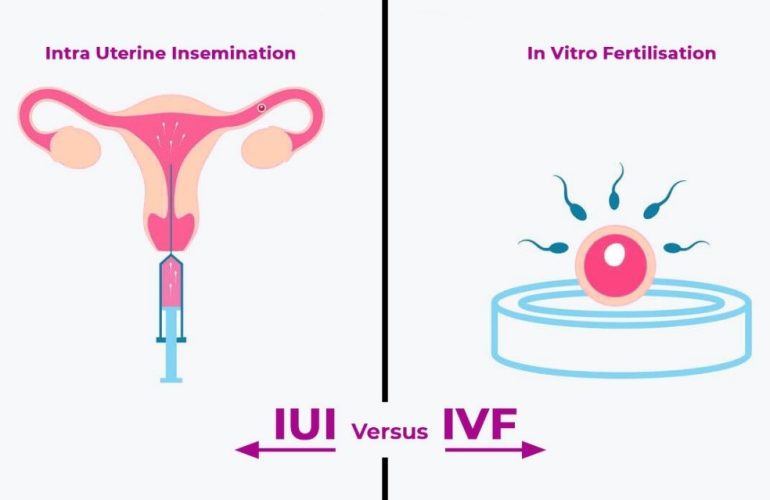
The embryo transfer is often described as the most emotional moment of the IVF journey. After weeks of medication, monitoring, and anticipation, the embryo is finally placed inside the uterus — and a new phase begins: waiting.
The first 48 hours after embryo transfer are particularly important, not because patients must remain completely inactive, but because this period marks the beginning of the implantation process. Understanding what happens inside your body and how to care for yourself during this time can help reduce anxiety and support optimal conditions for implantation.
What Happens Inside the Body After Embryo Transfer?
Once transferred, the embryo does not implant immediately.
Instead, several microscopic steps occur:
-
The embryo floats freely inside the uterus.
-
It begins communicating chemically with the uterine lining.
-
The embryo attaches to the endometrium.
-
Implantation gradually begins over several days.
For blastocyst transfers (Day 5 embryos), implantation may start within 24–48 hours. For earlier-stage embryos, the process may take slightly longer.
Importantly, normal daily movement does not cause the embryo to “fall out.” The uterus is a closed muscular organ designed to protect implantation.
Should You Rest Completely?
One of the biggest myths in IVF is strict bed rest.
Modern research shows:
✅ Light activity is safe
❌ Prolonged bed rest is unnecessary and may even reduce circulation
Most fertility specialists recommend:
-
Resting the day of transfer
-
Returning to gentle daily activities the following day
-
Avoiding physical strain rather than avoiding movement entirely
Think calm, normal living, not immobility.
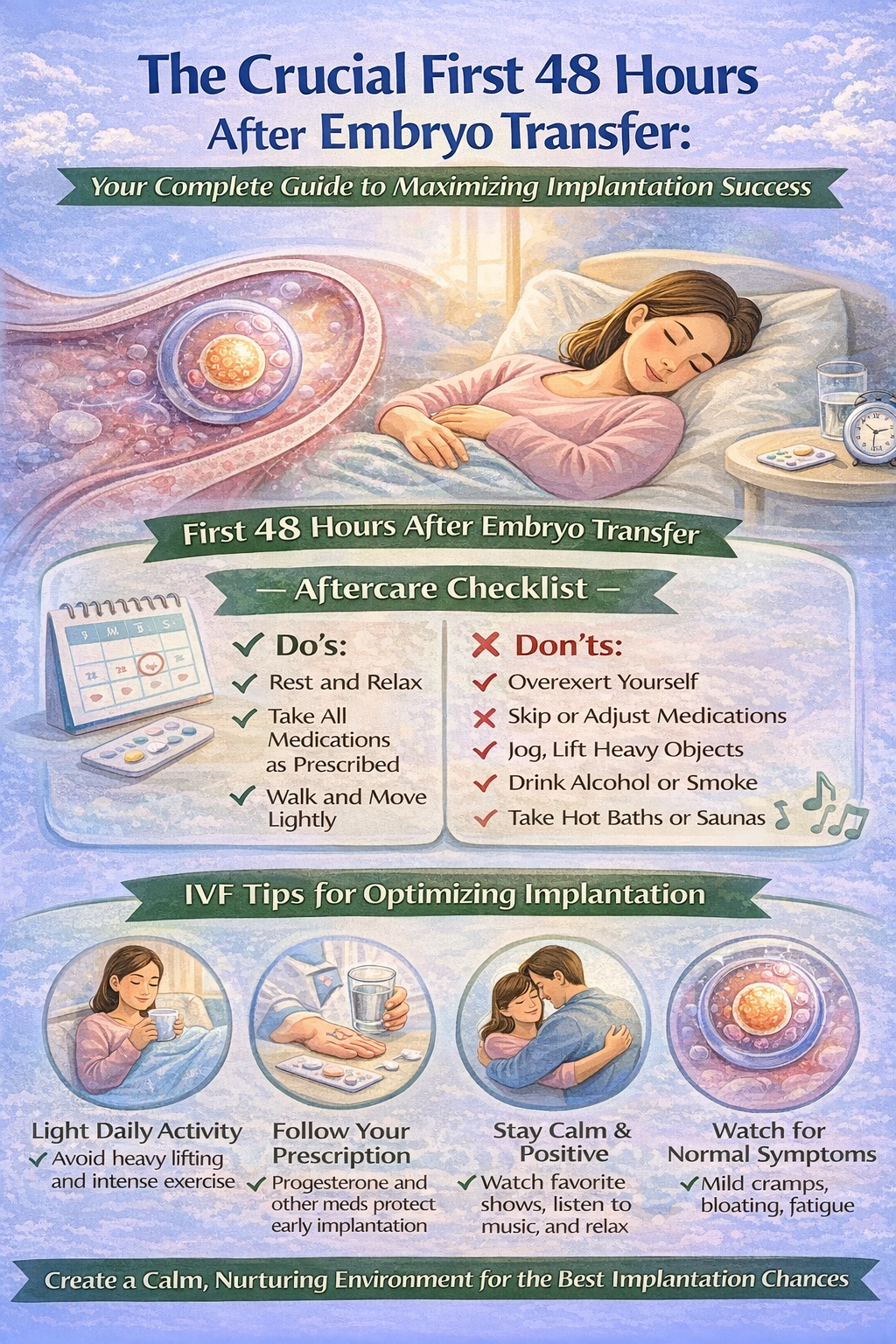
Recommended Guidelines for the First 48 Hours
1. Prioritize Gentle Movement
Short walks around your home or hotel are beneficial. Movement improves blood circulation to the uterus.
Avoid:
-
Running
-
Heavy lifting
-
Intense workouts
-
High-impact exercise
2. Continue Medications Exactly as Prescribed
Progesterone support is critical after transfer because it prepares the uterine lining for implantation.
Never stop medications early — even if symptoms change.
Common medications include:
-
Progesterone injections or suppositories
-
Estrogen support
-
Blood thinners (if prescribed)
Consistency is essential during these early hours.
3. Maintain a Warm, Relaxed Environment
While there is no strict scientific rule about temperature, many clinics advise avoiding extreme heat because elevated core body temperature may affect early implantation.
Avoid:
-
Hot baths
-
Saunas
-
Steam rooms
-
Heated yoga
Warm showers are perfectly safe.
4. Eat Light, Balanced Meals
Nutrition during this phase should focus on stability rather than special diets.
Recommended foods:
-
Lean proteins
-
Vegetables
-
Healthy fats
-
Whole grains
Stay well hydrated and avoid excessive caffeine (limit to one small coffee daily unless advised otherwise).
Alcohol and smoking should be avoided entirely.
5. Manage Stress — But Don’t Fear Normal Emotions
Patients often worry that stress alone can cause implantation failure. Everyday emotional fluctuations do not prevent pregnancy.
Helpful strategies include:
-
Watching relaxing shows
-
Listening to music
-
Meditation or breathing exercises
-
Gentle social interaction
The goal is emotional comfort, not forced positivity.
Symptoms During the First 48 Hours: What Is Normal?
Many patients search for early signs of implantation, but symptoms during this period are usually caused by medications rather than pregnancy itself.
You may experience:
-
Mild cramping
-
Bloating
-
Breast tenderness
-
Fatigue
-
Increased vaginal discharge
These are normal progesterone effects and do not confirm success or failure.
True implantation symptoms often appear later — if at all.
What You Should Avoid
During the first two days after transfer, avoid activities that increase abdominal pressure or inflammation:
-
Heavy exercise
-
Sexual intercourse (usually paused for several days)
-
Smoking or alcohol
-
New medications without doctor approval
Air travel is generally safe, but always follow your clinic’s individual guidance.
The Emotional Reality of the Waiting Period
The days following embryo transfer can feel longer than any other part of IVF. Many patients analyze every sensation or symptom.
It is important to remember:
-
Implantation is largely a biological process beyond conscious control.
-
Following medical guidance is enough.
-
Over-monitoring symptoms increases stress without improving outcomes.
Your role during these 48 hours is simply to create a calm, supportive environment for your body.
Final Thoughts
The first 48 hours after embryo transfer represent the quiet beginning of a potential pregnancy — a time when important biological communication is taking place between embryo and uterus.
Rather than strict restrictions, modern IVF care emphasizes balance: gentle activity, medication adherence, emotional comfort, and avoiding extremes.
Once the embryo is transferred, much of the process shifts from medical intervention to natural biology. Trust your preparation, follow your clinic’s instructions, and allow your body the space it needs during this delicate phase.
Because sometimes the most powerful step after IVF is not doing more — but allowing nature to begin its work.
Get in Touch with Our Clinics:
Cyprus Crown IVF Contact: https://en.cypruscrownivf.com/contact
Cyprus American IVF Contact: https://www.cyprusamericanivf.com/contact-us/
Dr. Halil Ibrahim Tekin (Dr. HIT) Youtube: https://www.youtube.com/@dr.halilibrahimtekin1715
Cyprus American IVF Youtube: https://www.youtube.com/@AmerikanTupBebekMerkezi
Clavis Fertility Centre: https://www.clavisfertilitycenter.com