When couples face fertility challenges, the focus is often placed on the female partner. However, male factors contribute to infertility in a significant number of cases—and one of the most overlooked issues is sperm DNA fragmentation.
Many men are told their sperm is “normal” based on standard tests. Yet, despite normal results, fertilization may fail, embryos may not develop properly, or pregnancies may end in miscarriage.
This is where sperm DNA fragmentation becomes important.
What Is Sperm DNA Fragmentation?
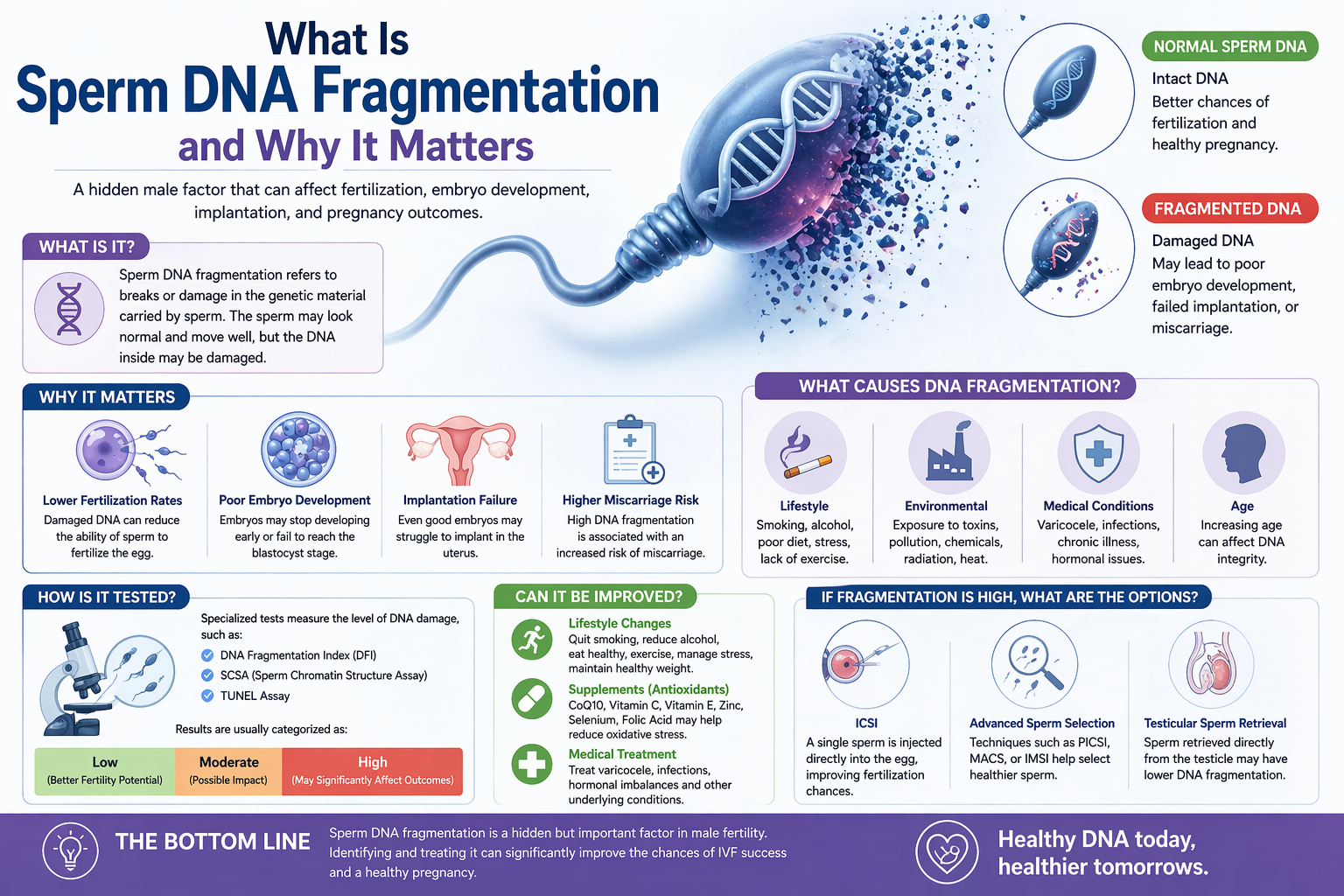
Sperm DNA fragmentation refers to damage or breaks in the genetic material carried by sperm.
Even if sperm looks normal under a microscope and has good movement (motility), its DNA may still be damaged.
This means:
- The sperm can reach the egg
- Fertilization may occur
- But embryo development may be compromised
In simple terms:
👉 The outside looks normal
👉 But the genetic content inside may be damaged
Why Standard Sperm Tests May Miss It
Traditional semen analysis evaluates:
- Sperm count
- Motility (movement)
- Morphology (shape)
However, these tests do not assess DNA integrity.
This is why some couples experience:
- Repeated IVF failure
- Poor embryo quality
- Unexplained infertility
even when semen analysis appears normal.
Why Sperm DNA Fragmentation Matters
DNA is the blueprint for embryo development.
When sperm DNA is fragmented, it can affect:
1. Fertilization Rates
Damaged DNA may reduce the chances of successful fertilization.
2. Embryo Development
Embryos created from fragmented DNA may:
- Stop developing early
- Fail to reach the blastocyst stage
3. Implantation Success
Even if embryos are transferred, implantation may fail.
4. Miscarriage Risk
Higher levels of DNA fragmentation have been associated with increased miscarriage rates.
What Causes Sperm DNA Fragmentation?
Several factors can contribute to DNA damage in sperm.
Lifestyle Factors
- Smoking
- Alcohol consumption
- Poor diet
- Stress
Environmental Factors
- Exposure to toxins
- Pollution
- Heat (saunas, hot baths, laptops on lap)
Medical Conditions
- Varicocele (enlarged veins in the testicles)
- Infections
- Chronic illness
Age
While male fertility declines more slowly than female fertility, increasing age can also affect DNA integrity.
How Is It Tested?
Sperm DNA fragmentation is measured using specialized tests, such as:
- DNA fragmentation index (DFI) tests
- SCSA (Sperm Chromatin Structure Assay)
- TUNEL assay
Results are usually categorized as:
- Low fragmentation → better fertility potential
- Moderate fragmentation → possible impact
- High fragmentation → may significantly affect outcomes
Can It Be Improved?
In some cases, sperm DNA fragmentation can be improved.
Lifestyle Changes
- Stop smoking
- Reduce alcohol
- Improve diet
- Manage stress
- Maintain healthy weight
Supplements
Antioxidants are often recommended, such as:
- CoQ10
- Vitamin C
- Vitamin E
- Zinc
These help reduce oxidative stress, which is a major cause of DNA damage.
Medical Treatment
- Treating varicocele
- Addressing infections
- Hormonal support (if needed)
What If Fragmentation Is High?
When sperm DNA fragmentation is significantly elevated, doctors may recommend alternative approaches:
1. ICSI (Intracytoplasmic Sperm Injection)
A single sperm is injected directly into the egg, bypassing some natural barriers.
2. Advanced Sperm Selection
Techniques to select healthier sperm may improve outcomes.
3. Testicular Sperm Retrieval
In some cases, sperm taken directly from the testicle may have lower DNA fragmentation than ejaculated sperm.
Why This Topic Is Often Overlooked
Sperm DNA fragmentation is still not part of routine fertility testing in many clinics.
As a result, couples may go through multiple IVF cycles without identifying the underlying issue.
Understanding this factor can be a turning point in treatment strategy.
Final Thoughts
Sperm DNA fragmentation is a hidden but important factor in fertility.
Even when standard sperm tests appear normal, DNA damage can affect:
- fertilization
- embryo development
- implantation
- pregnancy outcomes
The good news is that in many cases, this issue can be addressed through lifestyle changes, medical treatment, or advanced IVF techniques.
Because in fertility, success is not just about numbers or appearance—it’s about the quality of the genetic material that creates new life.
For any of your fertility problems, please do not hesitate to contact us. At Fertility Solutions we pride ourselves with the excellent tailored personal care we provide to our patients for their specific needs. A team member will contact you as soon as we get your message, and construct a personal treatment plan for your fertility problems in the country of Cyprus. You can also contact our clinics directly through the links below.
Get in Touch with Our Clinics:
Cyprus Crown IVF Contact: https://en.cypruscrownivf.com/contact
Cyprus American IVF Contact: https://www.cyprusamericanivf.com/contact-us/
Dr. Halil Ibrahim Tekin (Dr. HIT) Youtube: https://www.youtube.com/@dr.halilibrahimtekin1715
Cyprus American IVF Youtube: https://www.youtube.com/@AmerikanTupBebekMerkezi
Clavis Fertility Centre: https://www.clavisfertilitycenter.com