Endometriosis is one of the most common conditions affecting women of reproductive age — yet it remains widely misunderstood, especially when it comes to fertility.
Many women diagnosed with endometriosis ask the same question:
“Can I still get pregnant?”
The answer is yes — but in some cases, IVF becomes a necessary and effective path to pregnancy.
Understanding how endometriosis affects fertility helps patients make informed decisions about when to continue trying naturally and when to consider assisted reproductive treatments.
What Is Endometriosis?
The condition occurs when tissue similar to the lining of the uterus grows outside the uterus.
This tissue can be found on:
-
Ovaries
-
Fallopian tubes
-
Pelvic lining
-
Other nearby organs
Unlike normal uterine lining, this tissue has no way to exit the body, which can lead to:
-
Inflammation
-
Scar tissue (adhesions)
-
Pain
-
Disruption of reproductive function
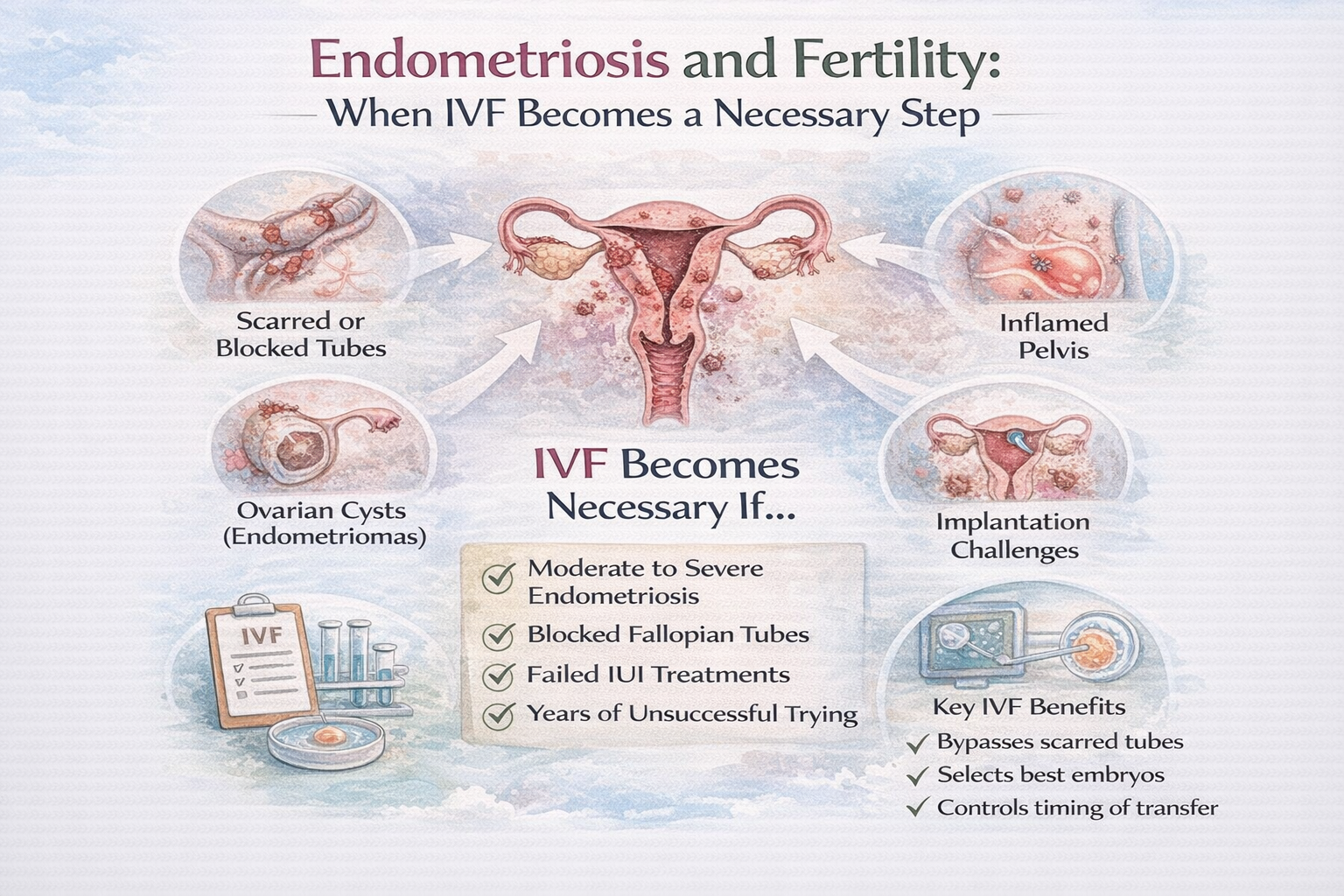
How Endometriosis Affects Fertility
This condition can impact fertility in several ways, depending on its severity.
1. Damage to Fallopian Tubes
Scar tissue can block or distort the fallopian tubes, preventing the egg and sperm from meeting naturally.
2. Ovarian Impact (Endometriomas)
This condition can form cysts on the ovaries, known as endometriomas.
These may:
-
Affect egg quality
-
Reduce ovarian reserve
-
Make egg retrieval more challenging during IVF
3. Inflammation in the Pelvis
Chronic inflammation can create an environment that is not ideal for fertilization or implantation.
This may affect:
-
Egg quality
-
Sperm function
-
Embryo development
4. Implantation Challenges
Even if fertilization occurs, endometriosis may affect the uterine environment, making implantation more difficult.
Can You Get Pregnant Naturally?
Yes — many women with mild endometriosis can conceive naturally.
However, chances may be reduced depending on:
-
Age
-
Severity of the condition
-
Duration of infertility
Doctors often recommend trying naturally for a certain period before moving to assisted treatments.
When IVF Becomes Necessary
IVF is often recommended in the following situations:
-
Moderate to severe endometriosis
-
Blocked fallopian tubes
-
Reduced ovarian reserve
-
Repeated unsuccessful attempts to conceive naturally
-
Failed IUI treatments
IVF bypasses several of the barriers caused by endometriosis.
How IVF Helps Overcome Endometriosis
IVF improves the chances of pregnancy by addressing key issues:
1. Bypassing the Fallopian Tubes
Since fertilization happens in the lab, blocked or damaged tubes are no longer a limitation.
2. Controlled Ovarian Stimulation
Doctors stimulate the ovaries to produce multiple eggs, increasing the chances of finding viable embryos.
3. Embryo Selection
Embryologists can select the best embryos for transfer, improving success rates.
4. Controlled Timing
IVF allows precise control over embryo transfer timing, optimizing implantation conditions.
Does Endometriosis Affect IVF Success?
This condition can influence IVF outcomes, particularly in severe cases.
However, many women with this condition achieve successful pregnancies through IVF.
Success depends on:
-
Age
-
Egg quality
-
Severity of the condition
-
Treatment strategy
In some cases, additional approaches may be recommended, such as:
-
Surgical removal of endometriosis lesions
-
Adjusted stimulation protocols
-
Frozen embryo transfers for better uterine preparation
The Importance of Early Action
One of the most important factors in managing endometriosis and fertility is timing.
Because the condition can progress over time, delaying treatment may reduce fertility potential.
Women with known endometriosis should consider early fertility evaluation, especially if pregnancy is a goal.
Emotional Impact of Endometriosis
Endometriosis is not only a physical condition — it can also be emotionally challenging.
Many women experience:
-
Chronic pain
-
Frustration with delayed diagnosis
-
Anxiety about fertility
Having a clear plan and understanding available options can help reduce uncertainty.
Final Thoughts
Endometriosis and fertility are closely connected, but a diagnosis does not mean the end of your journey to parenthood.
While some women conceive naturally, others may require assistance — and in many cases, IVF becomes the most effective solution.
The key is recognizing when to move forward with the right treatment rather than losing valuable time.
Because with the right approach, even complex fertility challenges like endometriosis can still lead to successful and healthy pregnancies.
For any of your fertility problems, please do not hesitate to contact us. At Fertility Solutions we pride ourselves with the excellent tailored personal care we provide to our patients for their specific needs. A team member will contact you as soon as we get your message, and construct a personal treatment plan for your fertility problems in the country of Cyprus. You can also contact our clinics directly through the links below.
Get in Touch with Our Clinics:
Cyprus Crown IVF Contact: https://en.cypruscrownivf.com/contact
Cyprus American IVF Contact: https://www.cyprusamericanivf.com/contact-us/
Dr. Halil Ibrahim Tekin (Dr. HIT) Youtube: https://www.youtube.com/@dr.halilibrahimtekin1715
Cyprus American IVF Youtube: https://www.youtube.com/@AmerikanTupBebekMerkezi
Clavis Fertility Centre: https://www.clavisfertilitycenter.com