One of the most frustrating and emotionally difficult experiences in fertility treatment is when a high-quality embryo fails to implant. Patients often hear reassuring words like “the embryo looks perfect,” only to face disappointment when pregnancy does not occur.
This leads to one of the most common questions in IVF:
If the embryo is good, why didn’t it work?
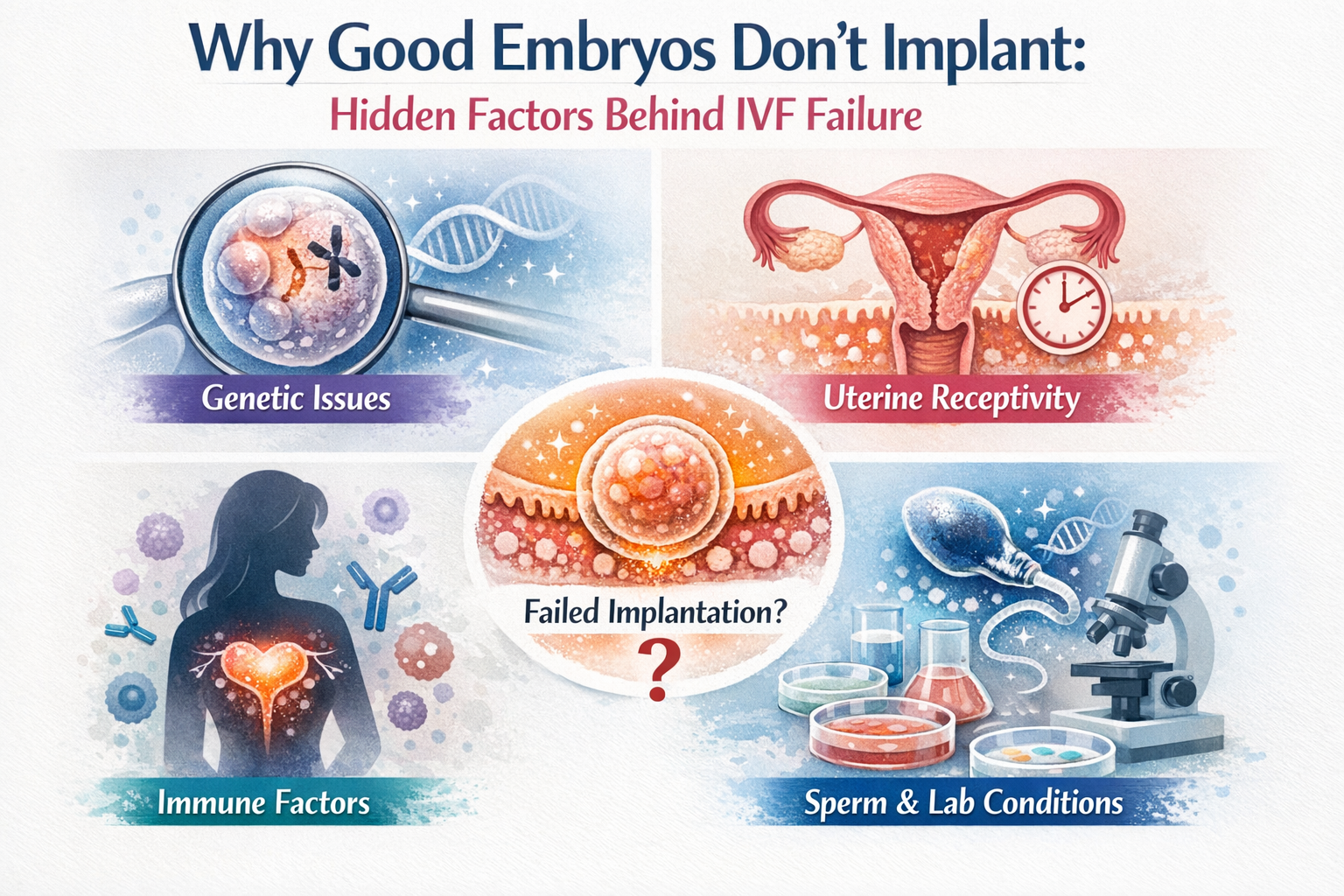
The answer is complex. IVF success depends on much more than embryo appearance. In fact, many implantation failures are caused by hidden factors that are not always visible during standard evaluation.
Understanding these factors is the first step toward improving outcomes.
Embryo Quality vs Genetic Reality
Embryos are typically graded based on their appearance under a microscope. While this provides useful information, it does not guarantee genetic normality.
A “beautiful” embryo can still carry chromosomal abnormalities.
These genetic issues may lead to:
-
Failed implantation
-
Early miscarriage
-
Slow embryo development
This is why advanced techniques such as genetic testing (PGT) are sometimes recommended — especially after repeated IVF failures.
The Uterine Environment Matters More Than You Think
Even a genetically normal embryo needs the right environment to implant.
The uterus must be receptive at the exact moment of embryo transfer — a concept known as the “implantation window.”
If timing is not perfectly aligned, implantation may fail.
Factors affecting uterine receptivity include:
-
Endometrial thickness
-
Blood flow to the uterus
-
Hormonal balance
-
Inflammation
In some cases, additional testing such as endometrial receptivity analysis (ERA) may help identify optimal timing.
Hormonal Imbalance
Hormones play a critical role in preparing the uterus for implantation.
Progesterone, in particular, is essential for stabilizing the uterine lining.
If progesterone levels are:
-
Too low
-
Too high
-
Or started at the wrong time
implantation may not occur, even if the embryo is healthy.
This is why careful monitoring and individualized protocols are essential.
The Immune System and Implantation
The immune system plays a subtle but important role in pregnancy.
In some cases, the body may react in a way that interferes with embryo implantation.
Possible issues include:
-
Increased inflammatory responses
-
Immune rejection-like activity
-
Abnormal uterine immune cells
Although this area is still being researched, immune-related factors are increasingly considered in cases of repeated IVF failure.
Sperm Quality: The Overlooked Factor
Many people assume embryo quality depends mostly on the egg. However, sperm quality also plays a major role — especially at the genetic level.
Even when sperm appears normal under standard testing, DNA fragmentation can affect embryo development.
This can lead to:
-
Poor embryo progression
-
Implantation failure
-
Miscarriage
Advanced sperm testing may be recommended when no clear cause of IVF failure is identified.
Laboratory Conditions and Technology
IVF success is also influenced by the environment in which embryos are cultured.
High-quality embryology labs carefully control:
-
Air quality
-
Temperature stability
-
Culture media
-
Handling procedures
Even small variations can affect embryo development.
This is why choosing a clinic with strong laboratory standards is critical.
Lifestyle and Hidden Biological Factors
Sometimes, implantation failure is influenced by factors outside the clinic.
These may include:
-
Stress
-
Smoking
-
Alcohol consumption
-
Poor nutrition
-
Sleep disturbances
While these alone may not cause failure, they can contribute to suboptimal conditions for implantation.
When IVF Fails Repeatedly
When implantation fails multiple times despite transferring good-quality embryos, the condition may be described as recurrent implantation failure (RIF).
At this stage, a more advanced and personalized approach is needed, which may include:
-
Genetic testing (PGT)
-
Uterine receptivity testing
-
Immune investigations
-
Alternative stimulation protocols
-
Advanced treatment options such as cytoplasmic transfer or tandem cycles
The key is not to repeat the same strategy, but to adapt the approach based on previous outcomes.
The Truth About IVF Success
IVF is not a simple process of placing an embryo into the uterus and expecting pregnancy to occur. It is a delicate interaction between:
-
Embryo genetics
-
Uterine environment
-
Hormonal balance
-
Laboratory precision
-
Timing
Even when everything appears perfect, hidden biological factors can influence the outcome.
Final Thoughts
When a good embryo does not implant, it does not mean the journey is over. It means that there is more to understand.
Modern fertility medicine is moving toward personalized treatment, where each failure provides valuable information to improve the next attempt.
Success in IVF is rarely about luck — it is about identifying the right factors and adjusting the strategy accordingly.
Because sometimes, the difference between failure and success is not the embryo itself… but everything surrounding it.
Get in Touch with Our Clinics:
Cyprus Crown IVF Contact: https://en.cypruscrownivf.com/contact
Cyprus American IVF Contact: https://www.cyprusamericanivf.com/contact-us/
Dr. Halil Ibrahim Tekin (Dr. HIT) Youtube: https://www.youtube.com/@dr.halilibrahimtekin1715
Cyprus American IVF Youtube: https://www.youtube.com/@AmerikanTupBebekMerkezi
Clavis Fertility Centre: https://www.clavisfertilitycenter.com