As couples increasingly choose to start families later in life, fertility medicine has adapted with advanced technologies designed to improve pregnancy outcomes. While in vitro fertilization (IVF) has made parenthood possible for many individuals over the age of 40, age-related genetic changes in eggs and sperm can still present challenges.
One of the most important tools available to address these challenges is preimplantation genetic testing, commonly referred to as PGT (previously called PGD). This technology allows fertility specialists to examine embryos for chromosomal abnormalities before they are transferred to the uterus.
For couples where both partners are over 40, genetic screening can play a crucial role in improving the chances of a healthy pregnancy.
Why Age Matters in Fertility
Age is one of the most significant factors influencing fertility and pregnancy outcomes.
In women, egg quality naturally declines over time. Although women are born with all the eggs they will ever have, the genetic integrity of those eggs gradually changes as the years pass.
After the age of 40, the likelihood of chromosomal abnormalities in eggs increases significantly. This can lead to:
-
Failed embryo implantation
-
Early miscarriage
-
Genetic conditions in the fetus
-
Repeated IVF cycle failures
While IVF can assist fertilization, it cannot automatically correct genetic errors within the egg.
Male Age Also Plays a Role
Although the effects of maternal age are widely discussed, paternal age also contributes to embryo health.
Men over the age of 40 may experience increased rates of DNA fragmentation in sperm, which can influence embryo development and pregnancy outcomes. Studies have shown that higher paternal age may increase the risk of certain genetic mutations and developmental disorders.
When both partners are over 40, the combined genetic risk factors may make embryo screening particularly valuable.
What Is PGT / PGD Testing?
Preimplantation genetic testing is a laboratory technique used during IVF to analyze embryos before transfer.
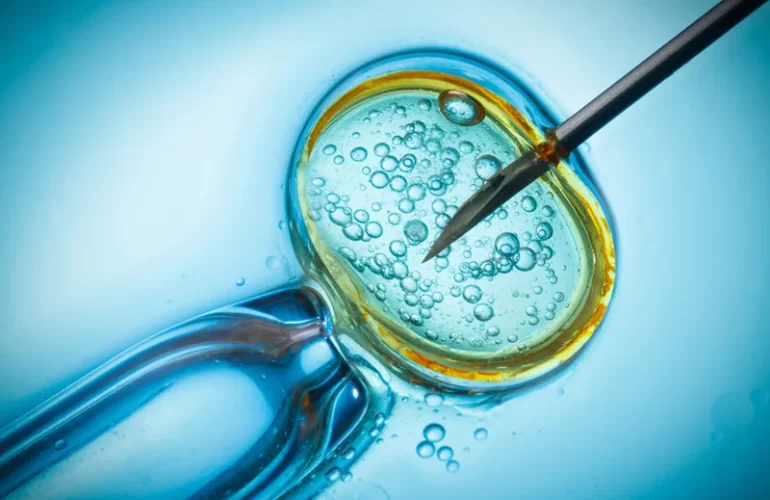
After fertilization, embryos are cultured in the laboratory for several days until they reach the blastocyst stage. At this stage, embryologists carefully remove a small number of cells from the embryo’s outer layer.
These cells are then analyzed using advanced genetic testing technologies to examine the embryo’s chromosomes.
The most commonly performed test is PGT-A, which screens embryos for chromosomal abnormalities known as aneuploidies.
A healthy embryo should contain 46 chromosomes arranged in 23 pairs. When embryos have extra or missing chromosomes, they may fail to implant or lead to miscarriage.
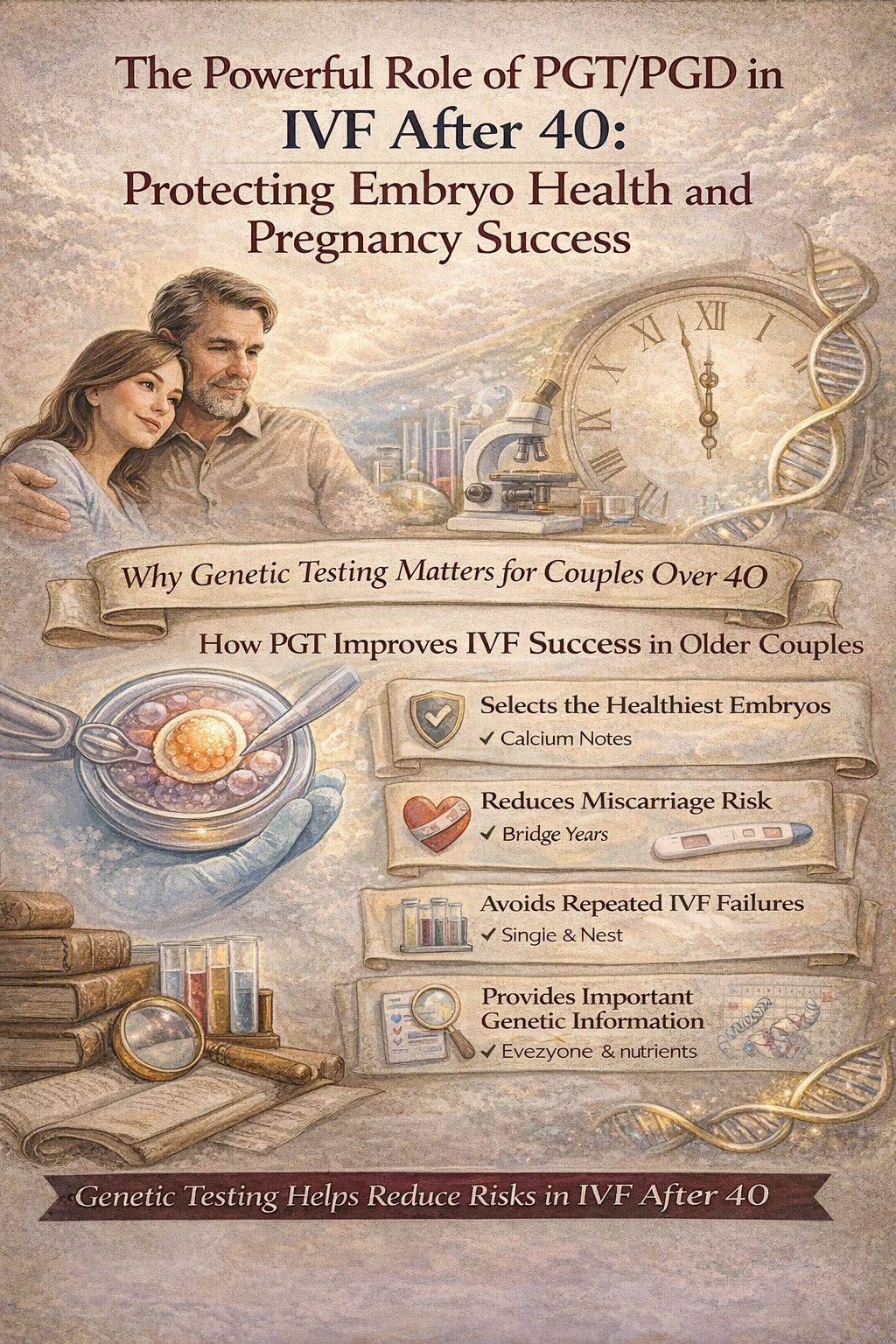
How PGT Improves IVF Success After 40
For patients over 40, PGT offers several important advantages.
1. Identifying Chromosomally Normal Embryos
PGT allows embryologists to identify embryos that have the correct number of chromosomes. These embryos have a higher probability of implantation and developing into a healthy pregnancy.
Without genetic testing, embryo selection relies mostly on appearance under a microscope, which cannot detect chromosomal abnormalities.
2. Reducing Miscarriage Risk
One of the most common causes of miscarriage is chromosomal abnormalities in the embryo. Because these abnormalities become more frequent with age, miscarriage rates increase significantly after 40.
By transferring embryos that are chromosomally normal, PGT can help reduce the risk of pregnancy loss.
3. Avoiding Repeated IVF Failures
Repeated IVF failures can occur when embryos consistently carry genetic abnormalities. PGT helps identify the embryos with the greatest reproductive potential, reducing the likelihood of unsuccessful transfers.
For many couples, this means fewer IVF cycles and a shorter path toward pregnancy.
4. Improving Pregnancy Planning
PGT also provides valuable information for fertility specialists when planning treatment. Knowing which embryos are genetically normal allows doctors to prioritize those embryos for transfer, improving efficiency and reducing uncertainty during the IVF journey.
Is PGT Recommended for Everyone?
Although PGT can be beneficial for many patients, it is particularly recommended in specific situations:
-
Women over the age of 38–40
-
Couples with repeated IVF failures
-
Recurrent miscarriages
-
Known genetic disorders in the family
-
Structural chromosomal abnormalities in parents
For couples over 40, PGT is often considered a useful strategy to maximize the chances of success with each embryo transfer.
The Future of Personalized IVF Treatment
Modern fertility medicine is moving toward personalized reproductive care, where treatments are tailored to each patient’s unique biology.
Genetic testing technologies like PGT allow doctors to better understand embryo viability and make more informed decisions during IVF treatment.
Rather than relying solely on chance, couples now have access to scientific tools that help identify embryos with the highest potential for a healthy pregnancy.
Final Thoughts
While age can present additional challenges in fertility treatment, advances in reproductive technology continue to expand the possibilities for parenthood.
For couples where both partners are over 40, PGT genetic testing offers a powerful way to improve IVF outcomes by identifying chromosomally healthy embryos and reducing the risk of miscarriage.
By combining IVF with advanced genetic screening, fertility specialists can help patients move forward with greater confidence, clarity, and hope on their path toward building a family.
Get in Touch with Our Clinics:
Cyprus Crown IVF Contact: https://en.cypruscrownivf.com/contact
Cyprus American IVF Contact: https://www.cyprusamericanivf.com/contact-us/
Dr. Halil Ibrahim Tekin (Dr. HIT) Youtube: https://www.youtube.com/@dr.halilibrahimtekin1715
Cyprus American IVF Youtube: https://www.youtube.com/@AmerikanTupBebekMerkezi
Clavis Fertility Centre: https://www.clavisfertilitycenter.com