When couples begin IVF treatment, many assume success depends mainly on age, hormone levels, or laboratory technology. While these elements are important, one of the most influential — and often overlooked — aspects of fertility is genetics.
Genetic factors affecting IVF outcomes can determine whether embryos develop normally, implant successfully, and result in a healthy pregnancy. Advances in reproductive medicine now allow fertility specialists to better understand these genetic influences and adapt treatment strategies accordingly.
Understanding the genetic side of fertility helps patients move from uncertainty toward more personalized and effective care.
Why Genetics Matter in IVF
Every embryo carries genetic material from both parents. For a pregnancy to develop successfully, this DNA must be correctly organized into 46 chromosomes.
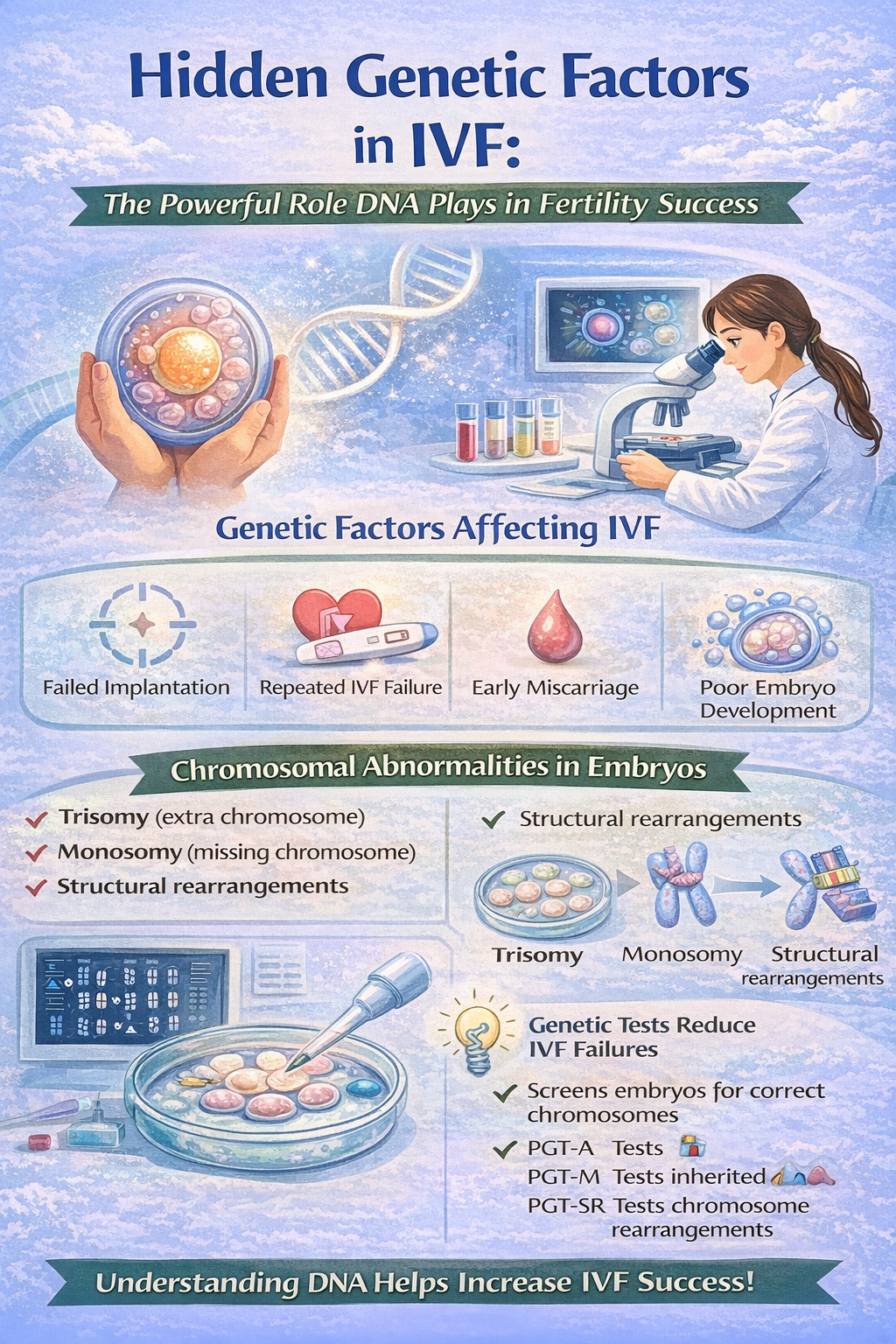
Even when fertilization occurs normally, embryos may fail to grow if chromosomal errors are present. In fact, genetics is considered one of the leading causes of:
-
Failed implantation
-
Repeated IVF failure
-
Early miscarriage
-
Poor embryo development
Studies suggest that a significant percentage of embryos created during IVF may carry chromosomal abnormalities, particularly as maternal age increases.
Chromosomal Abnormalities and Embryo Development
Chromosomes contain the instructions necessary for normal growth and development. When embryos have missing or extra chromosomes — a condition known as aneuploidy — implantation often fails or pregnancy ends naturally in early stages.
Common chromosomal issues include:
-
Trisomy (extra chromosome)
-
Monosomy (missing chromosome)
-
Structural rearrangements
These abnormalities usually occur during egg or sperm formation rather than during IVF itself.
This explains why even high-quality laboratories and perfect embryo transfers may still result in unsuccessful cycles.
Maternal Age and Genetic Quality
One of the strongest genetic influences in IVF is maternal age.
As women age:
-
Egg quantity declines
-
DNA repair mechanisms weaken
-
Chromosomal separation errors increase
By age 40, a large proportion of embryos may be genetically abnormal despite appearing healthy under a microscope.
This is why embryo appearance alone cannot always predict success — genetics provides deeper insight than visual grading.
Genetic Factors from the Male Side
Fertility genetics are not limited to egg quality. Sperm DNA integrity also plays a critical role.
Issues such as DNA fragmentation can affect:
-
Fertilization rates
-
Embryo development speed
-
Blastocyst formation
-
Miscarriage risk
Even men with normal semen analysis results may have underlying genetic sperm damage that influences IVF outcomes.
Advanced sperm testing may be recommended after repeated failed attempts.
Preimplantation Genetic Testing (PGT): A Major Advancement
One of the most important breakthroughs addressing genetic factors affecting IVF is Preimplantation Genetic Testing (PGT).
PGT allows embryologists to analyze embryos before transfer.
Types of Genetic Testing:
PGT-A (Aneuploidy Testing)
-
Screens embryos for correct chromosome numbers
-
Helps select embryos with higher implantation potential
PGT-M (Monogenic Testing)
-
Used when parents carry known genetic diseases
-
Prevents transmission of inherited conditions
PGT-SR
-
Detects structural chromosome rearrangements
By transferring genetically normal embryos, clinics can often reduce miscarriage risk and improve success rates per transfer.
Recurrent IVF Failure and Genetics
When IVF fails multiple times despite good embryo quality and normal uterine evaluations, hidden genetic factors are often investigated.
Possible causes include:
-
Parental chromosomal translocations
-
Embryo mosaicism
-
Mitochondrial dysfunction within eggs
-
Genetic compatibility factors affecting implantation
Genetic counseling becomes especially important in these situations to guide next steps.
Personalized IVF Through Genetic Understanding
Modern fertility treatment is shifting toward precision reproductive medicine.
Instead of repeating identical IVF protocols, specialists now use genetic information to:
-
Select the healthiest embryos
-
Adjust stimulation strategies
-
Recommend advanced laboratory techniques
-
Reduce unnecessary emotional and financial strain
Genetics allows treatment to become proactive rather than reactive.
Can Genetic Problems Be Prevented?
Not all genetic abnormalities can be avoided, but many risks can be managed through proper evaluation.
Recommended steps include:
-
Carrier screening for both partners
-
Genetic counseling when family history exists
-
PGT testing when indicated
-
Advanced embryo selection technologies
These approaches help patients make informed decisions while improving the chances of a healthy pregnancy.
Final Thoughts
IVF success is not determined by hormones or procedures alone — it is deeply connected to the invisible blueprint carried within each embryo.
Genetic factors affecting IVF outcomes explain why some cycles succeed quickly while others require deeper investigation and personalized solutions. Fortunately, advances in genetic testing now allow fertility specialists to better understand these challenges and guide patients toward safer, more effective treatment pathways.
As reproductive medicine continues to evolve, genetics is becoming one of the most powerful tools for turning hope into reality.
Because sometimes the key to IVF success is not doing more treatment — but understanding biology at its most fundamental level: DNA itself.
Get in Touch with Our Clinics:
Cyprus Crown IVF Contact: https://en.cypruscrownivf.com/contact
Cyprus American IVF Contact: https://www.cyprusamericanivf.com/contact-us/
Dr. Halil Ibrahim Tekin (Dr. HIT) Youtube: https://www.youtube.com/@dr.halilibrahimtekin1715
Cyprus American IVF Youtube: https://www.youtube.com/@AmerikanTupBebekMerkezi
Clavis Fertility Centre: https://www.clavisfertilitycenter.com