When preparing for in vitro fertilization (IVF), most patients focus on choosing the right clinic, understanding treatment protocols, and managing the emotional aspects of the journey. However, one critical factor that is sometimes overlooked is Body Mass Index (BMI) — a measurable indicator that can significantly influence IVF success, pregnancy health, and even the safety of the procedure itself.
Understanding the healthiest BMI for IVF is not about achieving perfection; it is about optimizing your body to support conception and sustain a healthy pregnancy.
What is BMI and Why Does It Matter?
BMI is a simple calculation based on height and weight that helps categorize whether a person falls within an underweight, normal, overweight, or obese range.


Standard BMI Categories:
| Category | BMI Range |
|---|---|
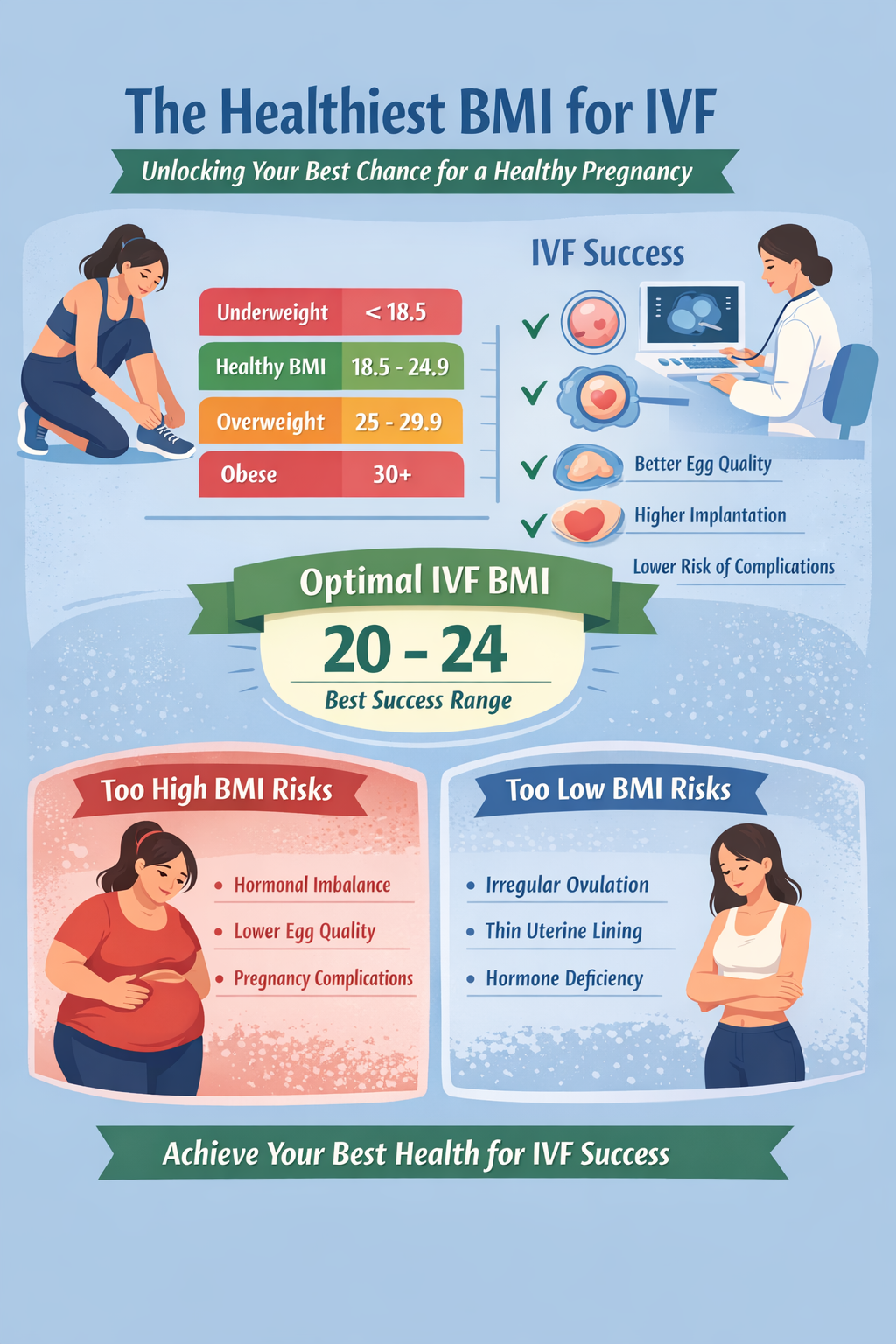
| Underweight | Below 18.5 |
| Healthy | 18.5 – 24.9 |
| Overweight | 25 – 29.9 |
| Obese | 30+ |
For fertility specialists, BMI is more than just a number — it is closely linked to hormone balance, egg quality, sperm health, and implantation potential.
The Healthiest BMI for IVF
Most reproductive specialists agree that the ideal BMI for IVF falls between 20 and 24.
While patients with slightly higher or lower BMIs can absolutely achieve pregnancy, research consistently shows that this range is associated with:
✅ Higher egg quality
✅ Better ovarian response to stimulation
✅ Improved embryo development
✅ Greater implantation rates
✅ Lower miscarriage risk
✅ Safer pregnancies
Think of this range as the body’s “metabolic comfort zone,” where hormones function most predictably.
How a High BMI Can Affect IVF
Excess body fat influences estrogen production and insulin regulation, which can disrupt ovulation and medication response.
Women with higher BMIs may experience:
-
Need for larger medication doses
-
Fewer retrieved eggs
-
Reduced embryo quality
-
Increased miscarriage risk
-
Higher chances of pregnancy complications such as gestational diabetes or preeclampsia
Additionally, IVF procedures themselves can become technically more complex, sometimes requiring adjusted treatment strategies.
Importantly — many clinics successfully treat patients with higher BMIs every day. The goal is risk reduction, not exclusion.
The Hidden Risks of Being Underweight
While much attention is placed on obesity, being underweight can be equally disruptive to fertility.
Low BMI may lead to:
-
Irregular or absent ovulation
-
Reduced estrogen levels
-
Thinner uterine lining
-
Hormonal instability
Your body interprets insufficient fat stores as a signal that it may not be the right time for pregnancy.
Even gaining just 2–4 kilograms can dramatically improve reproductive hormone function in some patients.
Should You Delay IVF to Adjust Your BMI?
This is one of the most common questions fertility specialists hear.
The answer depends largely on age and ovarian reserve.
For example:
-
A 28-year-old may benefit from taking several months to optimize weight.
-
A 40-year-old with diminished ovarian reserve may be advised not to delay treatment unnecessarily.
A personalized medical consultation is essential to balance timing with preparation.
How to Reach a Fertility-Friendly BMI Safely
Avoid extreme diets or rapid weight loss plans before IVF. These can actually harm egg quality.
Instead, focus on sustainable metabolic health:
Prioritize protein-rich nutrition to stabilize blood sugar.
Adopt a Mediterranean-style diet rich in vegetables, healthy fats, and lean proteins.
Incorporate moderate exercise such as walking, swimming, or strength training.
Improve sleep quality, which directly affects reproductive hormones.
Reduce chronic stress, a frequently underestimated fertility disruptor.
Even a 5–10% weight adjustment can significantly improve IVF outcomes.
Progress matters more than perfection.
Remember — BMI Is Only One Piece of the Fertility Puzzle
Although BMI is important, it does not define your fertility potential.
Top clinics evaluate many factors together, including:
-
Egg reserve
-
Embryo genetics
-
Sperm quality
-
Uterine health
-
Advanced laboratory technologies
-
Physician expertise
Many patients outside the “ideal” BMI range go on to have completely healthy pregnancies with the right medical guidance.
Final Thoughts
The healthiest BMI for IVF is ultimately about preparing your body for the remarkable process of creating life.
Rather than viewing weight as a barrier, consider it a powerful opportunity — one that allows you to actively improve your chances of success before treatment even begins.
With modern reproductive technologies, personalized care, and proactive preparation, patients today have more control than ever over their fertility journey.
If you are considering IVF, speaking with an experienced fertility team can help you understand where you stand today — and what small adjustments could make a meaningful difference tomorrow.
Because sometimes, the path to parenthood begins with creating the healthiest foundation possible.
For any of your fertility problems, please do not hesitate to contact us. At Fertility Solutions we pride ourselves with the excellent tailored personal care we provide to our patients for their specific needs. A team member will contact you as soon as we get your message, and construct a personal treatment plan for your fertility problems in the country of Cyprus. You can also contact our clinics directly through the links below.
Get in Touch with Our Clinics:
Cyprus Crown IVF Contact: https://en.cypruscrownivf.com/contact
Cyprus American IVF Contact: https://www.cyprusamericanivf.com/contact-us/
Dr. Halil Ibrahim Tekin (Dr. HIT) Youtube: https://www.youtube.com/@dr.halilibrahimtekin1715
Cyprus American IVF Youtube: https://www.youtube.com/@AmerikanTupBebekMerkezi
Clavis Fertility Centre: https://www.clavisfertilitycenter.com