Intrauterine devices (IUDs) are among the most effective and widely used forms of contraception worldwide. Despite their popularity, many women still worry about one important question: Can an IUD cause infertility?
This concern is understandable. Misinformation, outdated medical beliefs, and fear-based stories have caused confusion for years. The truth, however, is far more reassuring. Modern medical evidence shows that Intrauterine devices do not cause infertility when used correctly and monitored appropriately.
Let’s break down how IUDs work, their risks, and what science actually says about fertility.
What Is an IUD?
An Intrauterine device is a small, T-shaped device inserted into the uterus to prevent pregnancy. There are two main types:
-
Copper IUD – Uses copper to create an environment that is toxic to sperm
-
Hormonal IUD – Releases a small amount of progestin to thicken cervical mucus and thin the uterine lining
Both types are long-acting, reversible contraceptives (LARCs) and can prevent pregnancy for 3 to 10 years, depending on the device.
Why Do People Think IUDs Cause Infertility?
The fear that Intrauterine devices cause infertility dates back to the 1970s, when an unsafe device called the Dalkon Shield caused serious infections. That product was removed decades ago, but the myth remained.
Modern IUDs are entirely different—they are rigorously tested, medically regulated, and widely recommended by gynecologists and fertility specialists worldwide.
Do IUDs Actually Cause Infertility?
No.
Extensive research shows that Intrauterine devices do not increase the risk of infertility.
Once an Intrauterine device is removed, fertility typically returns immediately or within the next menstrual cycle. Many women conceive naturally within months after removal, even after years of use.
Studies comparing women who used Intrauterine devices to those who used other contraceptive methods show no difference in long-term fertility outcomes.
What Are the Real Risks of IUDs?
Like any medical procedure, Intrauterine devices carry some risks—but they are rare and manageable when insertion is performed by a trained professional.
1. Infection (Very Rare)
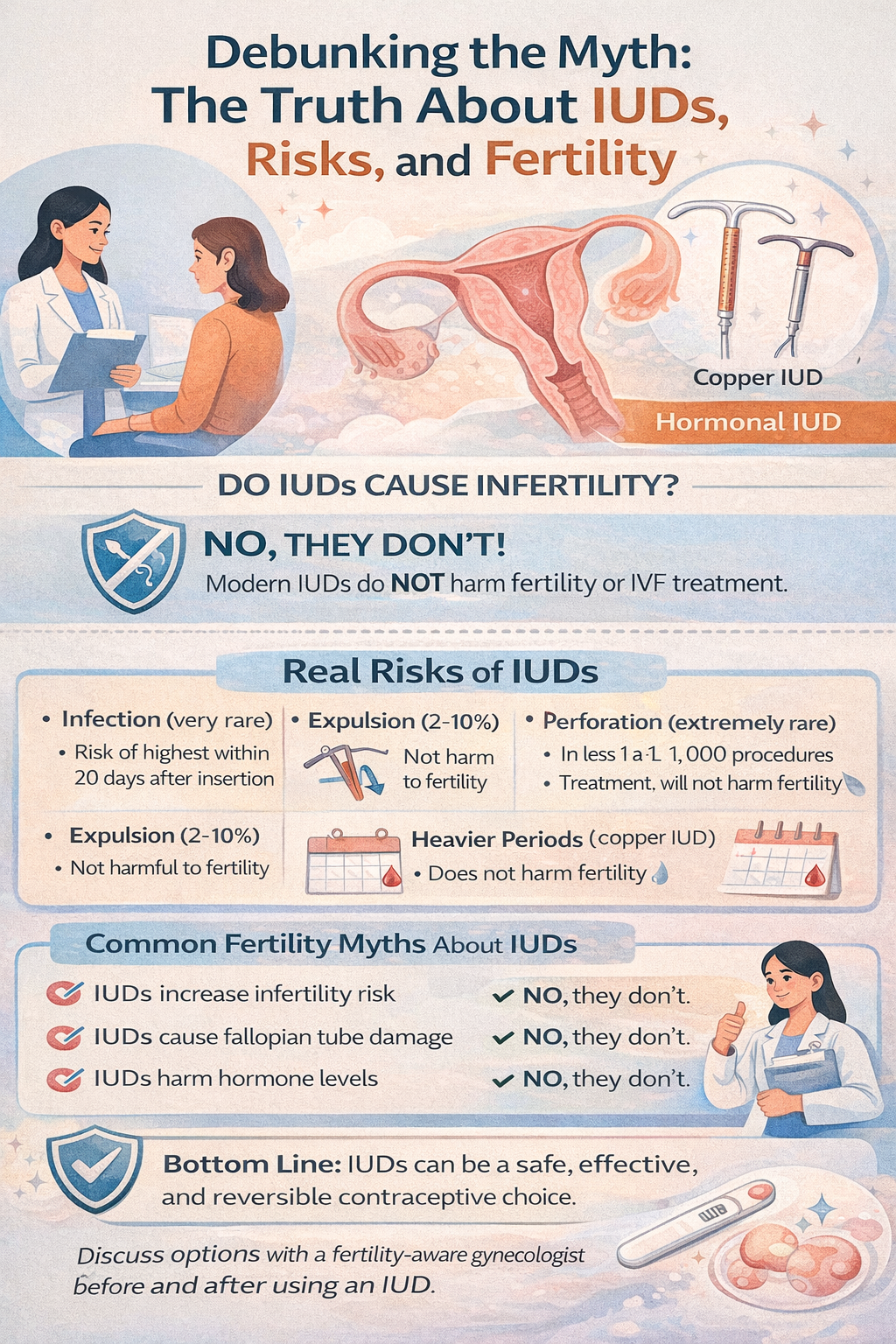
The risk of pelvic infection is highest within the first 20 days after insertion and is usually linked to an existing, untreated sexually transmitted infection (STI), not the IUD itself.
Routine screening before insertion significantly reduces this risk.
2. Expulsion
In a small percentage of cases (2–10%), the IUD may partially or fully expel, especially in the first few months. This does not affect fertility but may reduce contraceptive effectiveness.
3. Perforation (Extremely Rare)
Uterine perforation occurs in fewer than 1 in 1,000 insertions and is typically identified early. When treated properly, it does not cause infertility.
4. Heavier Periods (Copper IUD)
Some women experience heavier or more painful periods with copper IUDs, particularly during the first months. This is not harmful to fertility but may affect comfort.
Can an IUD Affect IVF or Future Fertility Treatment?
No.
An Intrauterine device does not damage the uterus, ovaries, or fallopian tubes. Once removed, it does not interfere with:
-
IVF treatment
-
Egg quality
-
Embryo implantation
-
Hormonal response
In fact, many women who later pursue IVF have previously used IUDs without any negative impact on outcomes.
When Fertility Issues Are NOT Caused by the IUD
If infertility is discovered after IUD use, the cause is usually unrelated and may include:
-
Endometriosis
-
Polycystic ovary syndrome (PCOS)
-
Tubal blockage from untreated infections
-
Age-related egg quality decline
-
Male factor infertility
The timing can make it feel like the IUD is responsible, but medically, it is not the cause.
Who Should Be Cautious With an IUD?
While Intrauterine devices are safe for most women, they may not be ideal for those with:
-
Active pelvic infections
-
Untreated STIs
-
Certain uterine abnormalities
-
Unexplained abnormal bleeding
A proper gynecological evaluation ensures the right contraceptive choice.
The Bottom Line
Intrauterine devices are one of the safest, most effective, and most reversible contraceptive options available today. They do not cause infertility, do not harm future pregnancy chances, and do not interfere with IVF or assisted reproductive treatments.
For women planning to conceive in the future, an Intrauterine device can be a reliable and worry-free choice—when inserted and monitored correctly.
If you’re considering an Intrauterine device or planning fertility treatment later, speaking with a fertility-aware gynecologist can help you make an informed, confident decision.
For any of your fertility problems, please do not hesitate to contact us. At Fertility Solutions we pride ourselves with the excellent tailored personal care we provide to our patients for their specific needs. A team member will contact you as soon as we get your message, and construct a personal treatment plan for your fertility problems in the country of Cyprus. You can also contact our clinics directly through the links below.
Get in Touch with Our Clinics:
Cyprus Crown IVF Contact: https://en.cypruscrownivf.com/contact
Cyprus American IVF Contact: https://www.cyprusamericanivf.com/contact-us/
Dr. Halil Ibrahim Tekin (Dr. HIT) Youtube: https://www.youtube.com/@dr.halilibrahimtekin1715
Cyprus American IVF Youtube: https://www.youtube.com/@AmerikanTupBebekMerkezi
Clavis Fertility Centre: https://www.clavisfertilitycenter.com