In modern fertility treatment, success is no longer based solely on egg quality, sperm health, or embryo development. Today, specialists understand that the uterine environment, especially the endometrial microbiome, plays a crucial role in whether an embryo implants successfully. One breakthrough tool helping doctors evaluate this hidden factor is the EMMA Test—a powerful diagnostic innovation that can significantly improve IVF outcomes for selected patients.
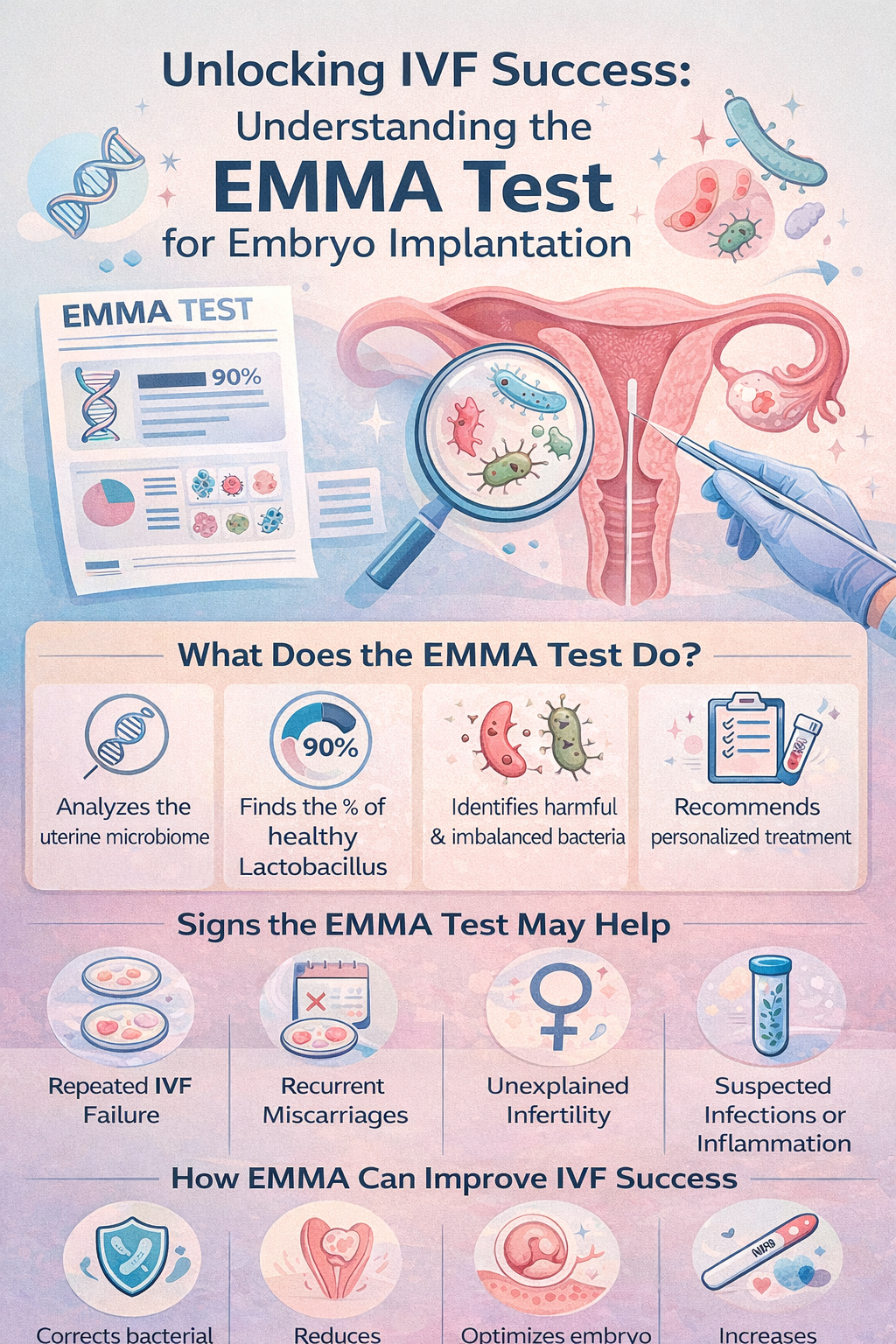
The EMMA Test (Endometrial Microbiome Metagenomic Analysis) analyzes the bacterial environment inside the uterus to determine whether it is optimal for embryo implantation. Since a healthy endometrial microbiome is essential for achieving pregnancy, this test allows fertility specialists to personalize treatment more precisely than ever before.
What Is the EMMA Test?
The EMMA Test is an advanced genetic analysis that examines the types and proportions of bacteria present in the endometrium. Scientists now know that the uterus contains its own microbiome—much like the gut or skin—made up of both beneficial and potentially harmful bacteria.
The most important “good bacteria” in the uterus are Lactobacillus species, which help create a stable, supportive environment for embryo implantation. Studies have shown that women with a Lactobacillus-dominant microbiomehave higher IVF success rates.
The EMMA Test provides:
-
A complete profile of all endometrial bacteria
-
The percentage of healthy Lactobacillus
-
Identification of harmful or imbalanced bacteria
-
Recommendations for antibiotics, probiotics, or personalized treatment
-
Guidance on when to perform embryo transfer for the best outcome
This level of detail is something standard examinations cannot reveal, making EMMA one of the most valuable tools for complex or repeated IVF cases.
Why the Endometrial Microbiome Matters
Even a perfect embryo can fail to implant if the uterine environment is not receptive. Factors such as inflammation, infection, or microbial imbalance can disturb the endometrium, making implantation more difficult.
A healthy microbiome helps:
-
Reduce inflammation
-
Strengthen the endometrial lining
-
Improve immune tolerance
-
Support embryo adhesion
-
Increase chances of ongoing pregnancy
When the microbiome becomes unbalanced—called dysbiosis—the risk of implantation failure increases significantly. This is especially important for women who have experienced:
-
Recurrent implantation failure
-
Miscarriages
-
Chronic endometritis
-
Unexplained infertility
For these patients, the EMMA Test provides valuable clarity.
How the EMMA Test Works
The test is simple, minimally invasive, and typically performed during a mock embryo transfer cycle. A small sample of endometrial tissue is collected using a thin catheter in a procedure similar to an endometrial biopsy.
The sample is then analyzed using next-generation sequencing (NGS) technology. This identifies and quantifies bacteria at a molecular level, providing a precise picture of the microbiome.
Results usually include:
-
Percentage of Lactobacillus dominance
-
Presence of pathogenic bacteria
-
Balance between beneficial and harmful species
-
Recommended treatment plan for correction
-
Suggested timing for embryo transfer
For many patients, the most impactful change is identifying an infection that had previously gone undetected.
EMMA, ERA, and ALICE: A Complete View of the Uterus
The EMMA Test is often performed alongside two other advanced tools:
-
ERA Test (Endometrial Receptivity Analysis): Determines the exact window of implantation
-
ALICE Test: Detects chronic endometritis and harmful bacteria
Together, these tests give a full picture of:
-
When the uterus is ready
-
Whether the environment is healthy
-
What needs to be corrected before embryo transfer
Clinics offering personalized medicine often use EMMA + ERA + ALICE to maximize the success potential of each IVF cycle.
Who Should Consider the EMMA Test?
While not necessary for every IVF patient, the EMMA Test is particularly valuable for:
-
Women with repeated failed IVF transfers
-
Patients with unexplained infertility
-
Women with recurrent miscarriage
-
Patients with suspected infections or inflammation
-
Those who want a highly personalized approach to embryo transfer
If previous cycles have failed despite good embryos, the microbiome may be the missing piece—and EMMA helps uncover it.
How EMMA Improves IVF Success
By identifying microbial imbalances and allowing doctors to correct them before transfer, EMMA increases the likelihood of:
-
Proper implantation
-
Reduced inflammation
-
Stronger endometrial receptivity
-
Higher pregnancy rates
-
Lower miscarriage risk
This transforms IVF from a standardized process into fully individualized care, improving both clinical outcomes and patient confidence.
A More Intelligent Approach to IVF
The EMMA Test represents the future of fertility medicine—where treatment is guided not only by visible factors like follicles and embryos, but also by the microscopic ecosystem that supports life itself.
For couples seeking the best chance at a successful pregnancy, especially after previous difficulties, EMMA provides groundbreaking insight and powerful direction.
For any of your fertility problems, please do not hesitate to contact us. At Fertility Solutions we pride ourselves with the excellent tailored personal care we provide to our patients for their specific needs. A team member will contact you as soon as we get your message, and construct a personal treatment plan for your fertility problems in the country of Cyprus. You can also contact our clinics directly through the links below.
Get in Touch with Our Clinics:
Cyprus Crown IVF Contact: https://en.cypruscrownivf.com/contact
Cyprus American IVF Contact: https://www.cyprusamericanivf.com/contact-us/
Dr. Halil Ibrahim Tekin (Dr. HIT) Youtube: https://www.youtube.com/@dr.halilibrahimtekin1715
Cyprus American IVF Youtube: https://www.youtube.com/@AmerikanTupBebekMerkezi
Clavis Fertility Centre: https://www.clavisfertilitycenter.com